
Do not use household hydrogen peroxide as a general stain treatment for wool clothing. Woolmark advises against both chlorine bleach and oxygen bleach when washing wool. Start with the garment’s own care instructions and a cleaning product intended for that item.
That advice can be confusing when an online tip calls peroxide a “gentle” or “non-chlorine” bleach. Those words do not establish that it is suitable for your sweater. Woolmark’s detergent guidance specifically includes oxygen bleach in its warning.
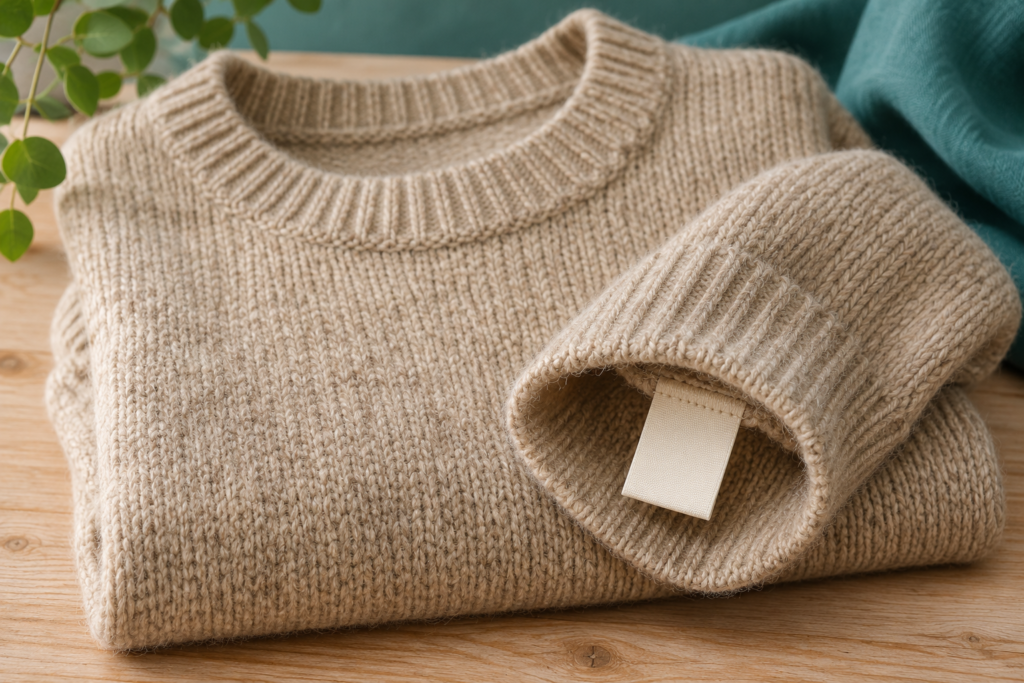
Featured illustration: a wool-knit garment, not a cleaning test or a real product care label.
Why a white wool sweater still needs care
Wool is a protein-based fiber. Its main protein is called keratin, as explained in Woolmark’s guide to wool structure. Protecting the garment means protecting that fiber, not just keeping its dye from fading.
Hydrogen peroxide is a bleaching ingredient. The American Cleaning Institute’s glossary identifies hydrogen peroxide solution as a form of liquid non-chlorine bleach. “Non-chlorine” describes the bleach chemistry; it does not mean “bleach-free.”
So a white sweater is not an automatic exception. Nor does a “machine washable” label approve every stain remover. Washing instructions and bleach restrictions answer different questions. Our laundry bleach-symbol guide explains the triangle symbols without treating them as a product recommendation.
Why factory bleaching is different
You may also find textile references that describe bleaching wool with hydrogen peroxide. That is real industrial chemistry, but it is not a home-care recipe.
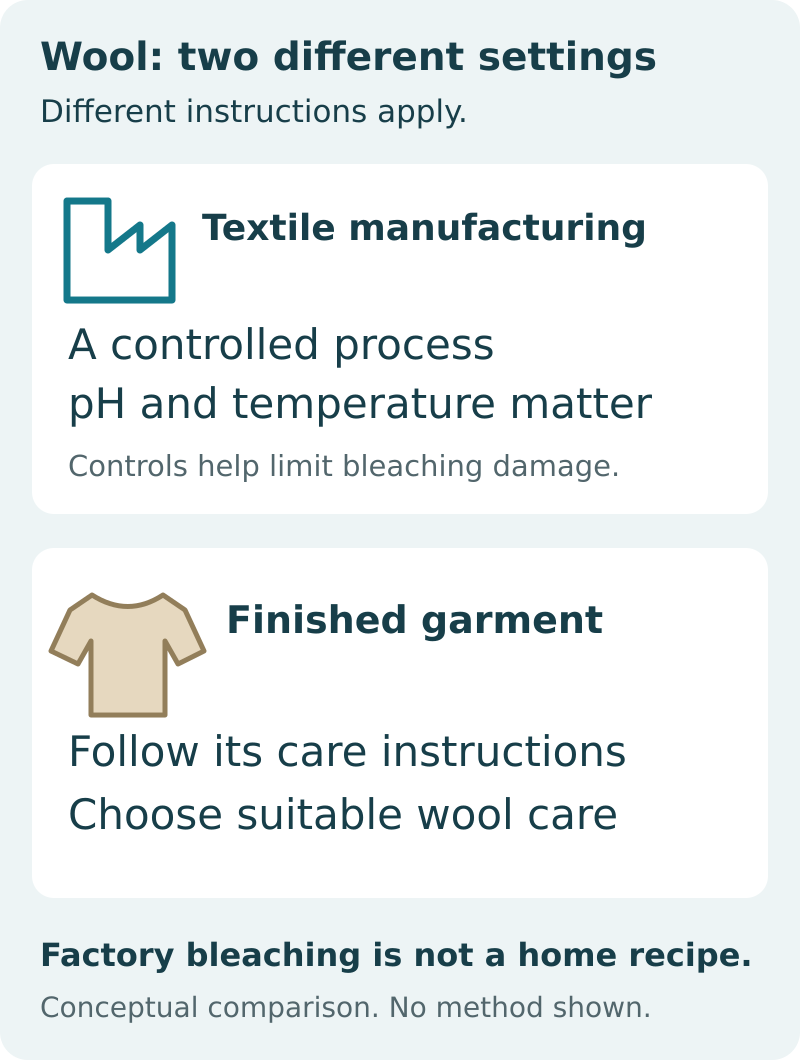
A Deakin University wool-finishing lesson hosted by Woolwise explains that wool is sensitive to oxidation and that peroxide bleaching requires controlled conditions, including pH and temperature, to limit damage. Here, pH means how acidic or alkaline the treatment is.
The useful distinction is the setting. A textile process is developed for a particular material and result. A finished sweater may also have dyes, seams, trim and care restrictions. A manufacturing reference does not tell you that a household peroxide bottle is appropriate for that garment.
Choose a wool wash, not a stronger stain treatment
For routine washing, Woolmark recommends a mild, neutral detergent and advises avoiding heavy-duty detergents, enzyme-containing “bio” detergents and products with bleach. Follow the garment’s instructions and the directions on the chosen wool-care product rather than adding a separate brightener.
Manufacturer guidance matters too. For example, icebreaker’s merino-sweater care guide says to avoid bleach and fabric softeners. Its washing advice is for its garments, not a universal method for every wool item.
- Read the exclusions. A product advertised for laundry or “colors” may still exclude wool.
- Keep the item type in view. Instructions for a sweater do not automatically apply to a wool rug, tailored coat or upholstered chair.
- Do not use a hidden-area test to cancel a warning. A lack of visible fading is not proof that the treatment suits the whole garment.
For broader questions about formulation and fabric compatibility, see our hydrogen peroxide and laundry guide.
If the mark remains, make a useful record
Rather than trying another chemical, take a photo of the care tag and the mark. Record what spilled, when it happened, and the names of anything already applied. Ask the garment maker or a qualified textile cleaner which next step fits the item. This is especially useful for a missing label, an unknown stain or a valuable garment.
The takeaway: Wool clothing needs wool-specific care. Peroxide’s use in textile manufacturing does not override home-laundry guidance or the finished garment’s instructions.
