
Yes, hydrogen peroxide can damage brass. Do not use it as a general brass cleaner. Brass is an alloy, a mix of metals, made mainly from copper and zinc. Peroxide can react with it. A brass-colored object may also have plating, lacquer or a deliberately aged finish that needs its own care.
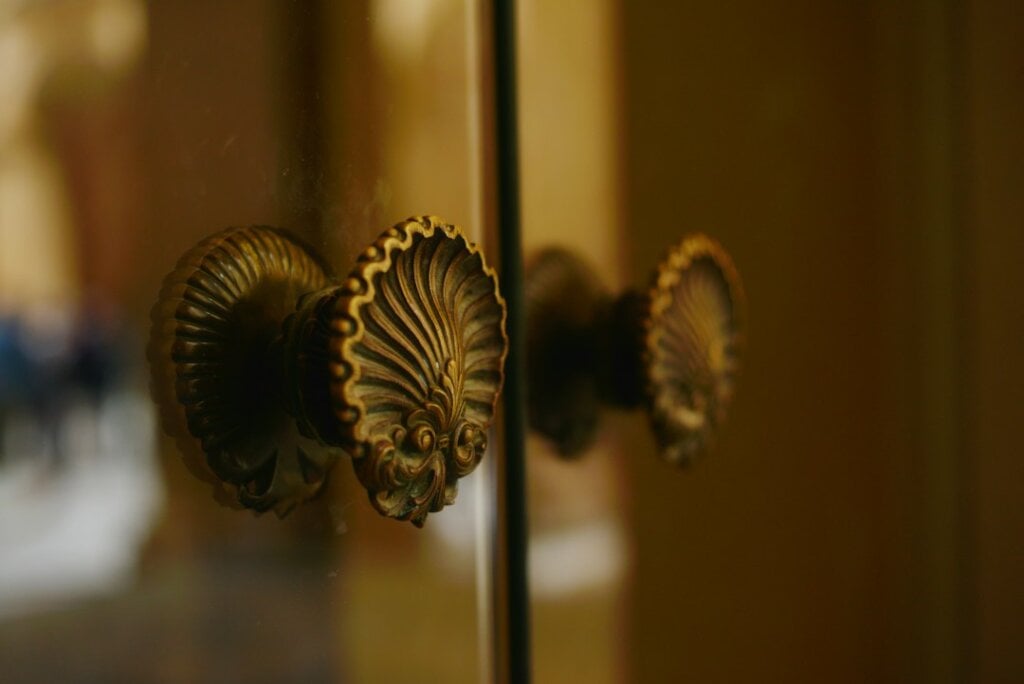
Featured photo: appearance alone does not identify an object’s alloy or finish. Photo by Liana S on Unsplash.
The CDC’s Agency for Toxic Substances and Disease Registry lists brass among materials that react with hydrogen peroxide. That establishes a compatibility concern. It does not tell you how quickly a particular bottle would affect a particular object, or provide a safe home-cleaning strength or soaking time.
First, separate the metal from the finish
“Brass” may describe the object’s metal, a thin metal coating, or simply the advertised color. Before cleaning, look up the maker, model and finish name. Check the receipt, product listing or installation paperwork rather than relying on color alone.
Two possible constructions beneath a brass-colored surface
Solid brass, with a coating
Brass-plated material
The Canadian Conservation Institute explains brass’s copper–zinc composition. Its brass-care guidance distinguishes original coatings and intentional patinas. A patina is a surface color or layer that develops over time or is created intentionally. These categories can overlap: solid brass can also be lacquered.
A magnet is a clue, not proof of solid brass
A magnet can reveal some objects made from brass-plated iron. But the reverse claim, “the magnet does not stick, so it must be solid brass,” goes too far.
CCI notes that brass is not magnetic and brass-plated iron is magnetic. It also documents a brass-plated lead object in its guidance on museum pollutants. That example shows why a different underlying material is possible. A magnet result cannot identify every layer or approve a cleaner.
Cleaning and polishing are different jobs
Removing loose dirt is not the same as stripping tarnish to make an object shine. CCI explains that polishing removes some surface metal as well as tarnish. Repeating it can gradually erase fine details.
A darker surface may be part of the intended appearance. That matters for an old candlestick, a decorative object or hardware sold with an aged finish. If you do not know which surface should remain, pause before polishing. CCI recommends consulting a conservator about historically important coatings.
Use instructions for the exact finish
Here is a concrete manufacturer example, not a universal recipe. Baldwin identifies its Non-Lacquered Brass 031 as a living finish that changes over time. Its care sheet for finish 031 says that, when cleaning is needed, use a soft cloth dampened with mild soapy water and dry immediately with a soft cloth.
The same sheet gives different instructions for other finishes. Do not transfer the 031 method to an unknown antique, a plated ornament or another brand’s hardware. A product described simply as “brass cleaner” is not automatically right for every brass-colored surface.
If peroxide has already touched the item
Stop adding cleaners or trying stronger mixtures. Follow the peroxide container’s handling and accidental-spill directions. For the object itself, contact its maker or a qualified metals conservator with:
- The object’s model, finish name and any known coatings.
- The peroxide product name and concentration from its label.
- When contact happened and what else has been applied.
- Photos showing the whole object and the changed area.
A new pink patch, rough area or changed sheen deserves assessment, not more polishing. CCI describes dezincification as zinc leaving brass and copper remaining; it can turn a yellow surface pink. That is one possible brass-corrosion process, not a diagnosis you can make from a photo or a claim that peroxide caused every pink mark.
For pieces with stones or settings, our jewelry-care guide covers those added material concerns. The useful starting point remains the same: identify the whole item and preserve the finish you actually have, rather than chasing shine with peroxide.
