
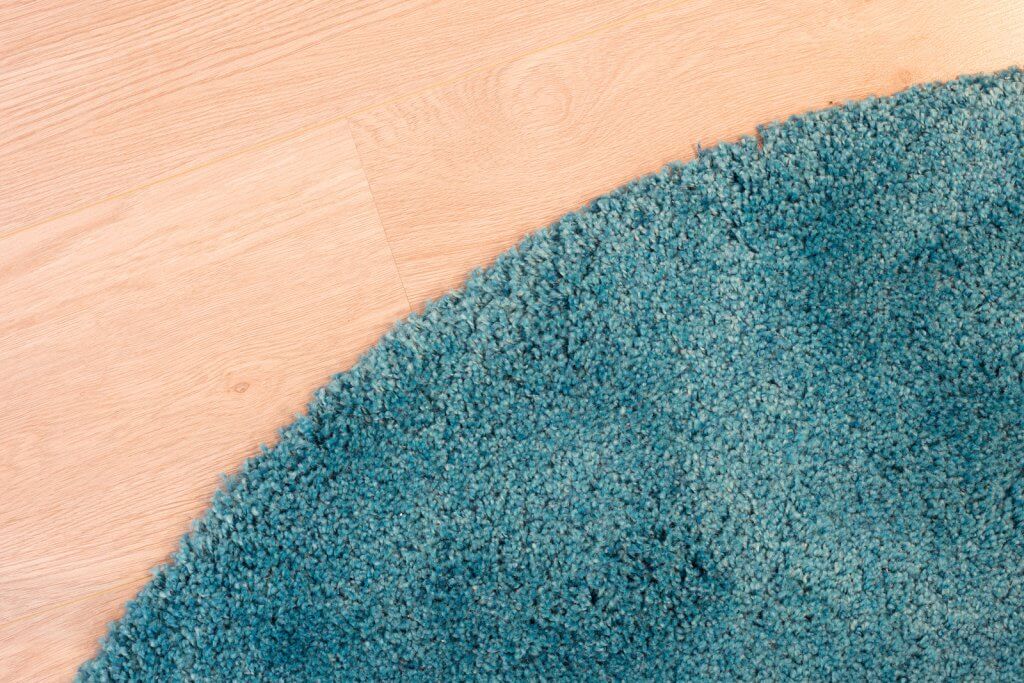
Carpet care starts with its fibers, dyes, backing and construction—not a universal peroxide recipe. A stain-removal method can change the carpet as well as the stain. This guide keeps food spills, pet accidents, tracked-in soil and specialist cleaning separate, without recommending homemade mixtures or promising disinfection.
Identify the Carpet Before Treating It
Every carpet is different and is made with different fibers. Some carpets are woven with wool fibers. Whereas others are made with cotton fibers.
Some carpets also combine different materials. Fibers, dyes and backing can respond differently to liquids and chemicals.
Those differences are a reason not to use a generic contact time. Find the manufacturer’s care instructions and, where available, the fiber and dye information. Include the backing, adhesives, underlay and floor beneath the carpet in the assessment; they can be affected by moisture or a cleaning product even when the surface looks unchanged.
The Carpet and Rug Institute’s care guidance distinguishes routine vacuuming, prompt attention to spills and periodic professional cleaning. Imported or valuable rugs can require specialist care rather than a household method intended for installed synthetic carpet.

What to Record When a Spill Happens
Identify what was spilled, roughly when it happened and any product already applied. Keep people and pets from spreading the material. Follow the carpet maker’s instructions for removing loose material and blotting an ordinary spill with a suitable clean cloth; avoid aggressive rubbing that can spread soil or damage fibers.
Do not combine cleaners, heat a mixture, add peroxide to soap or layer lemon juice or baking powder onto another treatment. A homemade recipe’s ingredients, temperature and appearance do not establish compatibility or safety.
Pet Accidents and Recurring Odor

A pet accident can affect more than the visible surface. Tell a professional what happened and whether the liquid may have reached the backing or underlay. Avoid saturating the area to chase a persistent smell; more liquid can make assessment and drying harder.
Odor reduction is not proof that organisms have been controlled. For recurrent accidents, address the animal’s needs separately with appropriate veterinary or behavioral guidance rather than relying on a carpet chemical to solve the cause.
Food and Beverage Marks

Wine, coffee, sauces and grease are different stains. Select a finished spot-removal product appropriate to the carpet and the identified mark, following its directions and any compatibility test. A test is not permission to exceed the instructions or repeatedly increase the amount applied.
A remaining mark may be dye loss or another permanent change rather than residue waiting for a stronger cleaner. If the color of the carpet changes or the stain spreads, stop and ask a qualified carpet-care professional to assess it.
Tracked-In Soil and Dust
Use a vacuum and attachments suitable for the carpet construction. Check the maker’s advice for looped, delicate or fringed rugs before using a powered brush. Remove grit through the permitted routine rather than turning dry soil into a wet paste.
Entrance mats and a plan for wet or muddy footwear can reduce the amount carried onto carpet. Keep these mats and the floor beneath them on their own care schedule; trapped moisture should not be ignored.
Blood, Unknown Contamination and Large Wet Areas
Do not treat a blood stain or unknown bodily-fluid contamination as an ordinary cosmetic spot. Avoid direct contact and obtain appropriate professional guidance for cleanup and protection. Removing the visible color is not evidence of disinfection.
Flooding, sewage, extensive wetting or suspected mold requires a different assessment from a small household spill. Tell the restoration professional what water or contaminant was involved and how long the material has been wet. Do not attempt to validate the carpet by spraying peroxide over it.
Cleaning Equipment Has Limits

An extraction machine is not suitable for every rug, backing or installation. Follow both the carpet and equipment instructions and use only the specified compatible product. Do not fill a machine with bulk peroxide or assume that a photograph of professional equipment provides a method for your carpet.
Plan drying and access before the work begins. Ask the professional how the backing and underlying floor will be assessed, and when normal use can resume. Do not cover a damp area to hide a mark.
Keep Scientific References in Context
The laboratory paper previously cited here concerns peroxide as an oxidizing agent for demonstrating glycogen in fixed rabbit-liver samples. It is not a carpet-cleaning trial and does not establish a home treatment or a safety guarantee for textiles.
Peroxide’s oxidizing and bleaching properties can alter colored materials; they do not make it universally safer than formulated cleaners. Poison Control’s peroxide guidance also explains exposure hazards. Keep chemicals in their original labeled packaging, follow the exact SDS, and seek case-specific advice after an exposure.
