
Do not use this article as a basis for pouring hydrogen peroxide into a septic tank, drainfield or vent. Septic care depends on the system design and condition, not a blanket claim that a chemical is safe when diluted. Problems should be assessed by a septic professional or the responsible local authority.
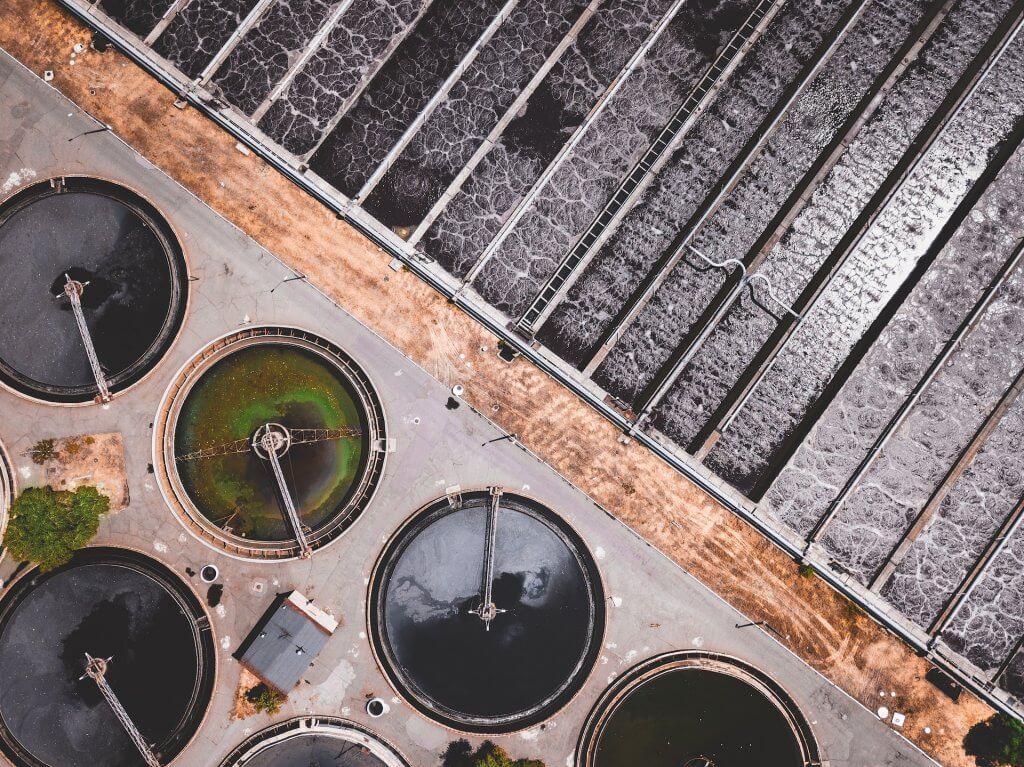
The header photograph shows a large wastewater-treatment facility. It is not a diagram of a household septic system, and its visible treatment equipment should not be used as a guide to home maintenance.
Understand the Tank and the Soil-Treatment Area
In a conventional system, the tank and the drainfield have different jobs. Solids accumulate in the tank, including settled sludge and floating scum, while liquid moves onward for treatment in the soil. The tank does not digest every material sent down a drain, and a clear-looking liquid is not proof of completed treatment.
Alternative systems may have pumps, controls or other treatment components with their own service requirements. Find the system plan, inspection records and operating instructions before deciding what work is needed. Do not assume all systems work by adding oxygen to the tank.
What EPA Says About Additives
EPA’s septic-tank additives fact sheet does not recommend routine additives for domestic wastewater treatment. It specifically notes that peroxide, once promoted for drainfield reconditioning, was found to damage soil structure and compromise system life.
This contradicts a universal recommendation to use peroxide to restore a drainfield or support its bacteria. An old patent describing a proposed process is not proof that the process is appropriate for your property. Do not attempt a chemical flush or combine peroxide with another additive.
Schedule Inspection and Pumping for Your System
Regular inspection and removal of accumulated solids remain important. EPA’s care guidance describes inspection and pumping as separate maintenance tasks. The appropriate schedule depends on system type, use and condition; an additive is not a replacement for pumping.
The original article cited a University of Minnesota owner’s guide. The university’s current care-and-maintenance guidance likewise emphasizes removing solids and determining a schedule for the household and system. Keep professional service reports rather than relying on one universal interval.
Reduce Avoidable Loads and Protect the Drainfield
Have plumbing leaks addressed and avoid sending unusually large volumes of water through the system at once. Keep wipes, grease, medicines and unwanted chemicals out of the wastewater system. Ask the local waste authority how to dispose of a chemical; the septic system is not a disposal route for surplus stock.
Know where the drainfield is. Do not drive or park over it, and keep additional drainage directed away as advised for the property. Consult the septic professional before landscaping or construction that could affect the treatment area.
Respond to Problems Without Opening the Tank
Report sewage backups, persistent odors, alarms or unexpected wet areas to a qualified septic service provider. Keep people and pets away from sewage or exposed wastewater. Do not enter a septic tank or reach into an opening to inspect or add a product.
Provide the service provider with the system records, recent household changes and details of anything already added. A temporary change in odor does not establish that the underlying fault has been repaired or that groundwater is protected.
