
Floor care should start with the material and finish, not a universal mop-bucket recipe. Hardwood, laminate, carpet and concrete have different construction and moisture limits. This guide helps you select the right instructions and recognize when a mark or equipment choice needs professional assessment; it does not recommend peroxide mixtures or promise disinfection.

Identify the Floor and the Task
Find the product name, installation information and care instructions if available. Note coatings, sealers, joints and repaired areas. A floor that resembles wood or stone may be a different material with different care requirements.
Decide whether you are removing loose soil, attending to a spill or investigating a persistent mark. Ordinary cleaning, stain removal and disinfection are not interchangeable results. If an antimicrobial process is required, obtain appropriate guidance and use a product labeled for the actual surface and task.
Hardwood Floors

Check both the flooring and finish manufacturer’s instructions. Use permitted dry-maintenance tools and a cleaner appropriate to the finish. Do not assume every wood floor has the same coating or that a light-colored board is safe to bleach.
The National Wood Flooring Association advises against wet and steam mops on wood flooring. Address spills according to the floor-care instructions, and seek professional advice for dark marks, worn coating or liquid that may have entered seams. Do not repeat peroxide applications until the wood becomes lighter.
Laminate Floors
Look up the exact laminate product and its installation requirements. Water-resistance descriptions and warranties vary; they are not permission to leave liquid at joints or use any cleaning appliance. Follow the specified cleaning and moisture limits.
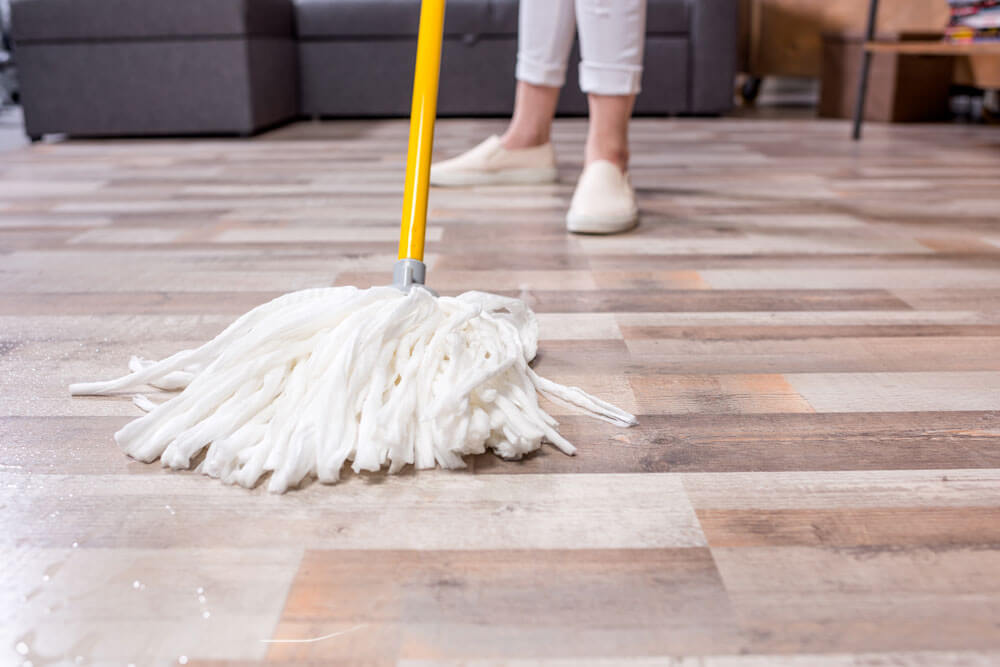
The mop photograph is a general illustration, not a recommendation for that tool on every laminate floor. Do not add peroxide or another chemical to a spray bottle or machine as a substitute for the floor manufacturer’s method. If edges swell or joints change, stop and have the condition assessed.
Carpet and Area Rugs
Identify fibers, dyes, backing and the surface beneath the carpet. Follow the manufacturer’s instructions for routine vacuuming and a suitable finished spot remover. Do not assume a recipe for installed synthetic carpet applies to wool, a delicate rug or an unknown backing.
Tell a qualified carpet-care professional about persistent stains, odors or significant wetting. A visible improvement does not establish disinfection. Avoid repeated saturation or chemical combinations that can complicate the problem.
Concrete, Tile and Sealed Surfaces

Concrete may be bare, sealed, coated or polished; tile installations may include grout and separate sealers. Identify the whole surface before selecting a product or brush. A stiff tool or abrasive paste can damage a coating even if the base material seems durable.
Follow the relevant care instructions for a compatible cleaner, application and any required rinse. Do not assume that peroxide’s decomposition into water and oxygen makes rinsing optional or leaves every floor ready for contact with children or pets.
Steam Equipment Requires Two Compatibility Checks
Check both the floor instructions and the exact appliance manual. Permission to use an appliance on one floor product does not extend to another. Some laminate manufacturers publish model-specific steam restrictions, while wood-floor guidance can prohibit the method.
Pergo’s steam-cleaning guidance illustrates why the particular floor and its joints matter. Resolve uncertainty with the manufacturer rather than treating a small trial as a guarantee against later damage.

Do not add bulk peroxide to a steam cleaner or heat it as part of a cleaning routine. An appliance intended for water or a specified finished solution is not validated for another chemical. Keep liquid away from electrical components and follow the equipment’s operating instructions.
Questions That Do Not Have One Universal Answer
Is a household percentage automatically safe for floors?
No. Formulation, material, finish and application all matter. A familiar concentration is not a substitute for compatibility information and product directions.
Is vinegar or peroxide always the better cleaner?
Neither ingredient name establishes a universal winner. Identify the soil and surface, then choose a suitable finished product. Do not mix them or apply one over another product’s residue.
Does bubbling prove that cleaning or disinfection worked?
No. Peroxide can release gas as it decomposes; that is not a test of surface cleanliness or microbial control. Judge a process by its appropriate instructions and requirements, not a visible reaction.
Build a Repeatable Care Record
Keep the floor and product instructions together and note any changes in appearance. Address leaks, grit or recurring moisture sources as well as the visible mark. Store chemicals in their original labeled packaging and follow the exact SDS for handling and exposure response.
