
Curtains combine fabric, dyes, linings, coatings and hardware. They should not all be treated with the same spray or washing-machine recipe. This guide helps you decide what can be cleaned at home, what instructions apply and when a curtain-care professional is the better choice. It does not recommend bulk peroxide or a homemade chemical mixture.

Read the Label and Identify the Construction
Check the care label before taking curtains down. Note the fiber, lining, blackout coating, decorative trim, weights and any fixed hardware. If the label is missing, contact the maker or a qualified textile cleaner rather than guessing from the color or feel.
A sheer panel and a heavy lined drape may need different care even when they hang in the same room. A white fabric is not automatically bleach-safe, and an outdoor-performance textile’s instructions should not be applied to an unrelated indoor curtain.
Assess the Mark Before Choosing a Method
Record whether the problem is ordinary dust, a food spill, a water mark, fading or another change. Note its age and any prior treatment. Some discoloration is a permanent change in dye or fiber rather than soil that another application will remove.


A finished spot-removal product must be suitable for the exact textile and construction. Follow its instructions and any specified compatibility test. A test spot does not prove that saturating the whole panel or increasing treatment time will be safe.
Plan Removal and Rehanging
Check how the curtain is attached and whether it can be reached safely. Heavy panels and high tracks may need professional handling. Keep hooks and other removable hardware organized, and do not pull on a rail or fabric to force a stuck fitting free.
Photograph the arrangement if that helps you rehang the panels correctly. Follow the maker’s instructions about which components may be removed, washed or reinstalled.
Routine Dust Care
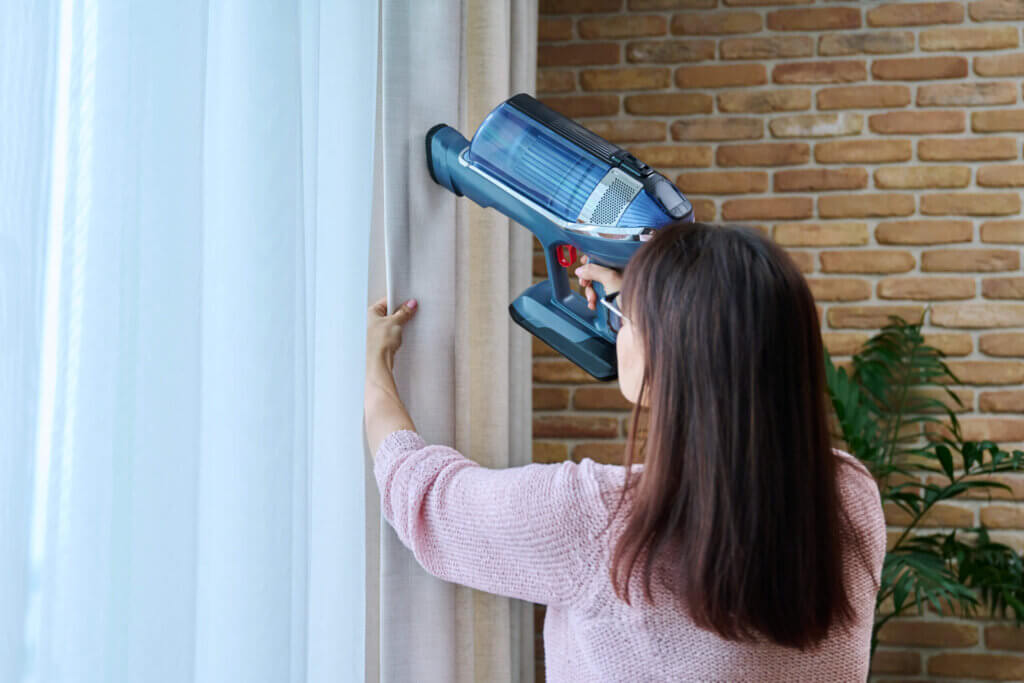
If the curtain maker permits vacuuming, use a suitable upholstery attachment and a method that will not pull or snag the fabric. Avoid dragging a powered brush over delicate material. The pictured equipment is an illustration, not evidence that every curtain tolerates that method.


Dust removal is an ordinary housekeeping task; visible dust does not diagnose a mite infestation or prove a cause of respiratory symptoms. Do not spray peroxide onto hanging curtains as a health treatment or vacuum wet fabric with equipment intended only for dry use.
Wash Only What the Instructions Permit
Some curtains can be washed, while others need professional care. Follow the exact instructions for machine capacity, cycle, detergent, rinsing and drying. A mesh bag does not make a nonwashable coating or lining washable.
As an example of why product identity matters, Sunbrella publishes care guidance for its own curtains and drapery. Those directions concern specified fabrics; they are not permission to apply the same process to silk, velvet, antique lace or an unknown blackout coating.
Do Not Add a Chemical “Boost”
Do not add bulk peroxide to laundry detergent, combine it with baking soda or apply a homemade paste. More product or a longer soak does not establish better cleaning and may change the material. This guide does not provide a dose, ratio or contact time for those mixtures.
Follow the textile and finished-product instructions for any permitted wiping or spot care. Stop if color transfers, the texture changes, a coating separates or the material begins to distort. Ask a qualified cleaner before further treatment.
Recurring Dampness, Musty Odor or Visible Mold
Check for condensation, leaks or damp wall surfaces near the curtains. Addressing the moisture source is separate from improving the fabric’s appearance. Do not use a peroxide stain treatment as proof of mold control or promise that a curtain is disinfected.
Seek appropriate remediation and textile-care advice for suspected mold or significant water damage. Tell the professional about the fabric, extent of wetting and any products already used.
Drying, Storage and Ongoing Care

Follow the curtain’s drying and rehanging instructions. Do not assume that high heat, direct sun, ironing or rehanging while damp is appropriate for every fabric. Make sure the permitted process is complete before storing curtains, and avoid compressing or folding material in a way that damages its finish.
Keep a record of the care method and any changes in appearance. Store cleaning products in their original labeled containers away from children and pets. For chemical handling and exposure response, follow the exact label and SDS rather than a claim that natural ingredients are harmless.
