
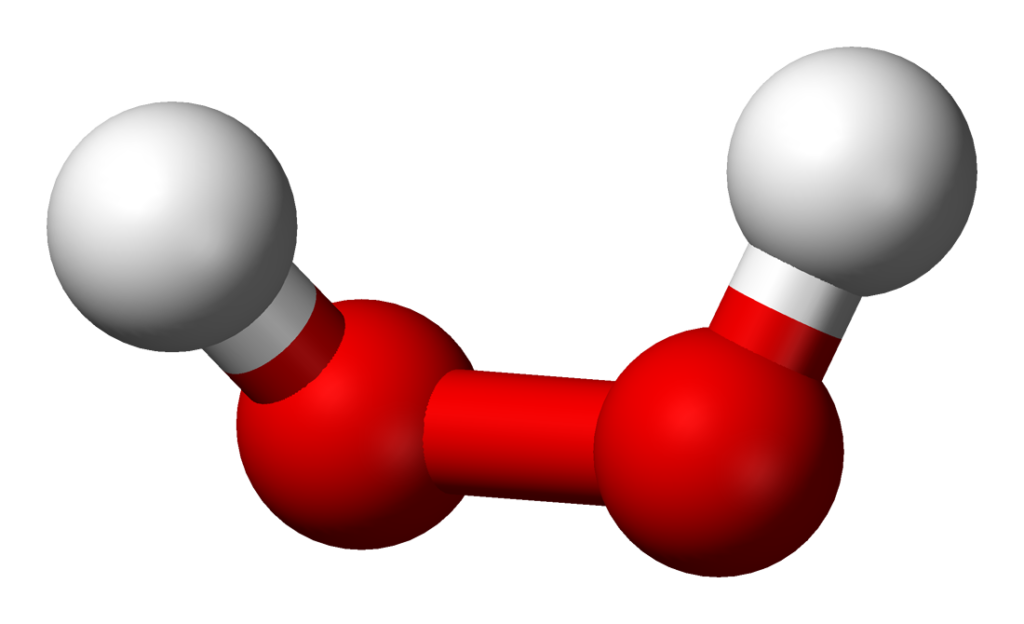
Hydrogen peroxide, H₂O₂, is a chemical compound. A bottle containing hydrogen peroxide dissolved in water is a mixture, specifically a solution. Both answers can be correct because one describes the chemical itself and the other describes the whole liquid in the bottle.
That distinction explains why H₂O₂ always has the same formula, while products can carry different percentages. The percentage changes the amount of peroxide present, not the identity of a peroxide molecule.
The compound: what H₂O₂ describes
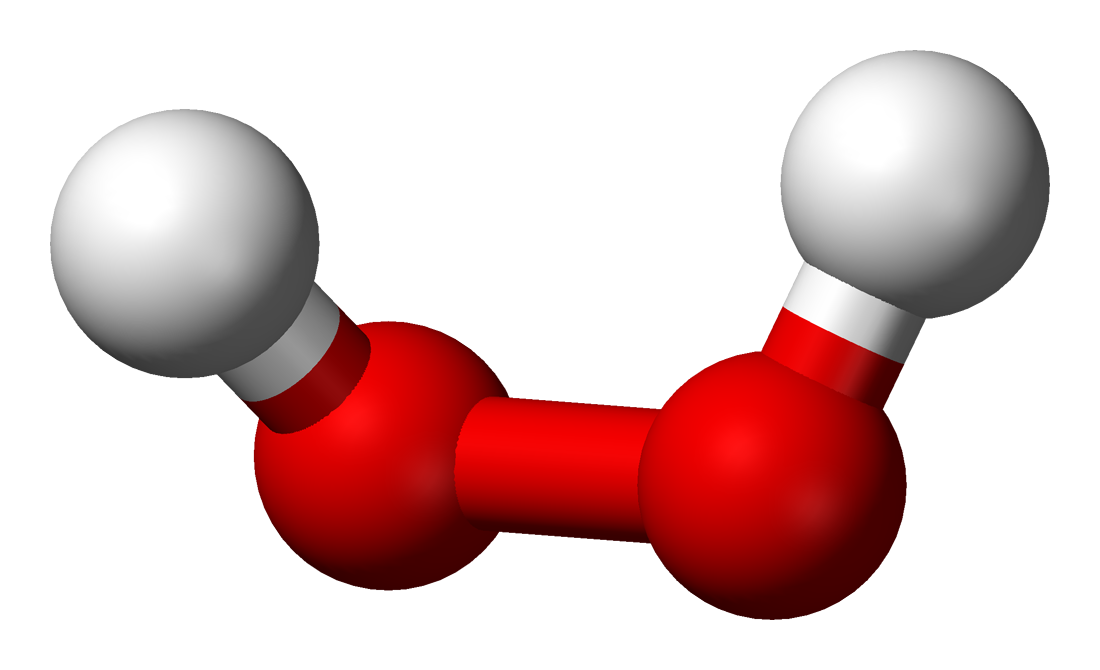
A hydrogen peroxide molecule contains two hydrogen atoms and two oxygen atoms. Its formula describes that fixed makeup, not a blend of loose hydrogen and oxygen gases. PubChem’s hydrogen peroxide record identifies the compound as H₂O₂.
Hydrogen peroxide is therefore not an element. An element has just one kind of atom; a compound contains different elements chemically joined. A compound can also be called a pure substance in chemistry. Here, “pure” is a classification, not a statement that a store-bought bottle contains 100% H₂O₂. OpenStax explains these matter classifications.
Want to see how the atoms connect? Our separate guide to hydrogen peroxide’s molecular structure covers bonds and three-dimensional shape. The question here is different: are we describing one chemical, or everything in a sample?
The mixture: what is in an aqueous solution?
Aqueous means that water is the solvent. The liquid contains hydrogen peroxide and water, which are two different substances. IUPAC defines a mixture by the presence of more than one chemical substance. Calling the solution a mixture does not mean its contents are dirty, defective or separated into layers.
Hydrogen peroxide is a compound.
Peroxide in water is a mixture.
A normal aqueous peroxide solution is homogeneous: its composition is uniform throughout the liquid, rather than forming visibly separate layers. “Solution” is the familiar name for this kind of mixture. Clear appearance alone cannot tell you whether a liquid is a pure substance, which concentration it has, or whether it is suitable for a particular job.
What does the percentage on a bottle mean?
The formula and the percentage answer separate questions:
- H₂O₂: which chemical is present?
- The stated concentration: how much of that chemical is in the solution?
If a label says 3% w/w, the percentage is by mass. As a hypothetical reading example, 100 grams of that solution contains 3 grams of hydrogen peroxide. It does not mean three peroxide molecules out of every hundred molecules, or 3 milliliters in every 100 milliliters. OpenStax distinguishes mass, volume and mass-volume concentration units.
This is an example for understanding a label, not a preparation instruction. Check the actual label or specification for the concentration basis. Different percentages still describe solutions of the same compound.
Does “peroxide and water” describe every ingredient?
Not necessarily. Formulations can contain additional substances. For example, Sigma’s H0904 product information separately lists peroxide in water and small amounts of stabilizing compounds. That is evidence about that named reagent, not the formulation of a Bulk Peroxide product.
Use the exact product documentation rather than guessing from the chemical name. For help with that distinction, see what stabilized hydrogen peroxide means.
The quick answer to remember
The molecule is a compound; the aqueous product is a mixture. “Pure substance,” “solution” and a bottle’s concentration are not competing descriptions of the same thing. They describe different levels of the chemistry.
This classification does not establish safe handling. Follow the product label and concentration-specific Safety Data Sheet. Do not try to separate or concentrate a peroxide solution to demonstrate the distinction.
