
Skip hydrogen peroxide as the default cleaner for an aluminum baking sheet. Warm water, mild dish soap and a soft sponge are a better first step. Check what actually touches the food: bare aluminum, a nonstick coating, and aluminized steel are not the same, even when the pans look alike.
Check the pan before following a peroxide cleaning tip
Look for a brand or model stamped underneath, then pull up the exact product page. Check both the material and the finish. For example, Nordic Ware sells both an uncoated aluminum pan and a nonstick pan built on an aluminum base. “Aluminum” alone doesn’t tell you which one you have.
Bare aluminum
Look for “natural aluminum” or “uncoated.” Start with the maker’s hand-washing instructions. A shift in color alone may be cosmetic.
Nonstick coating
The coating is the surface you’re cleaning. For example, USA Pan’s silicone nonstick guidance calls for mild soap and a soft sponge or nylon pad, not steel wool or harsh abrasives.
Aluminized steel
This is steel with an aluminum-based layer. It may also have a separate nonstick finish. Check the care instructions for the whole pan, not just the metal named on the box.
The bars show these surfaces as layers, not to scale. The visible color of your pan is not a reliable guide.
Can’t find the model? Don’t use color or shine alone to guess the finish. Stick to a gentle hand wash rather than trying an improvised peroxide and baking soda paste. A tip for one pan isn’t proof it works on yours.
What kind of mark are you trying to remove?
- Sticky or raised residue: Start with ordinary washing. For baked-on residue that remains, check the maker’s next step. Nordic Ware’s Naturals guide names a dish spray for its uncoated line and advises against extended soaking. USA Pan says not to soak its bakeware. Don’t copy one brand’s instructions to another.
- Flat gray, brown or bronze color after washing: You may be seeing a change in the finish rather than grease you can scrub off. Nordic Ware says ordinary patina and dishwasher discoloration on its Naturals aluminum line are cosmetic. That isn’t a diagnosis for an unknown pan or a damaged coating.
- Peeling, flaking or missing coating: Treat it as possible surface damage, not as a spot to bleach or scour. Check the maker’s guidance before using the pan again. More cleaner won’t put a coating back.
Why peroxide tips give different answers
A cleaning tip might be aimed at stuck-on grease, but a pan maker’s directions also have to protect the finish. Some tips discuss bare metal; others discuss coated pans or aluminized steel. Don’t assume that they mean the same surface. A bottle marked “3%” tells you the peroxide strength, not whether it’s suitable for a particular baking sheet.
For everyday cleanup, let the pan cool, wash it with warm water and mild dish soap using the tool your maker recommends, then rinse and dry it. If the mark remains, decide whether it’s raised residue, flat discoloration or possible coating damage before reaching for anything stronger.
More from Bulk Peroxide: Hydrogen peroxide and baking soda: cleaning claims and limits · Dishwasher care and cookware limits.
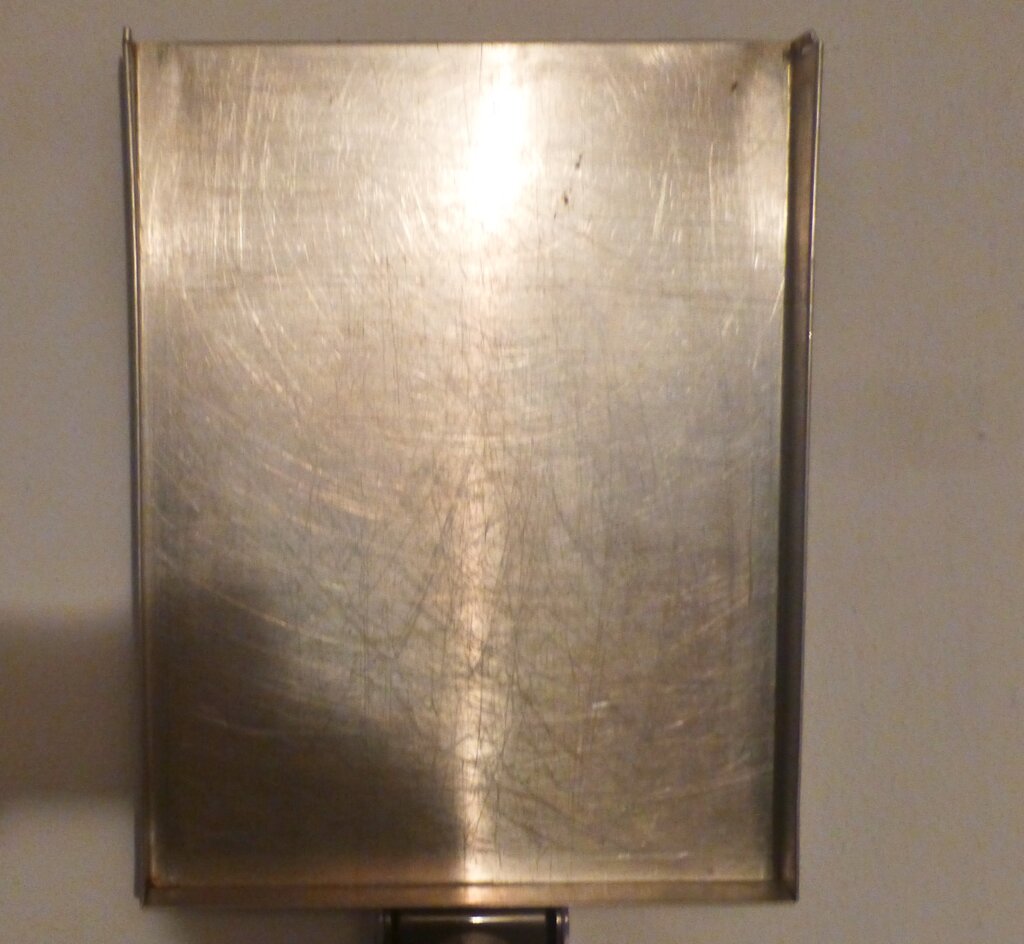
Featured photo: Altes Küchenblech Aluminium by Manni5, CC BY-SA 4.0. The photo shows an older pan, not a cleaning test.
