

Hydrogen peroxide’s CAS Registry Number is 7722-84-1. Its chemical formula is H2O2. The CAS number identifies the chemical substance. It does not identify the strength, grade, bottle size or manufacturing lot of a peroxide product.
That distinction matters when you are matching a label to a safety data sheet or comparing suppliers. The same CAS number can appear on solutions with very different concentrations. A match is useful, but it is not the whole product check.
| Identifier | Hydrogen peroxide example | What it tells you |
|---|---|---|
| Chemical name | Hydrogen peroxide | The substance’s name |
| CAS Registry Number | 7722-84-1 | A specific chemical identity |
| Molecular formula | H₂O₂ | Two hydrogen atoms and two oxygen atoms per molecule |
| Product concentration | For example, 3% or 35% | The amount of peroxide in the solution, with the stated concentration basis |
| Lot number | Supplier-assigned batch code | Which batch the product belongs to |
The chemical identity and formula are confirmed in Health Canada’s hydrogen peroxide assessment. The concentration examples above are not interchangeable products.
What does a CAS number mean?
CAS assigns a unique numeric identifier to a substance in its registry. Unlike a formula, the digits do not describe the molecule’s structure or composition. CAS explains that the number itself has no chemical meaning.
Think of it as a precise lookup identifier. It is helpful when names, translations or spelling vary. It is not an approval mark, a purity rating or a safety score.
Why a matching CAS number is not enough
Suppose your paperwork calls for a particular 3% solution, but the container says 35%. Finding 7722-84-1 on both documents does not resolve the mismatch: both identify hydrogen peroxide, but the products have different strengths.
After the CAS number, compare the product name or code, concentration and supplier. If you are checking batch results, compare the lot number too. The SDS vs. COA guide explains which document answers which question.
How to read H₂O₂
The small numbers indicate how many atoms are in a molecule: two hydrogen atoms and two oxygen atoms. The letter O stands for oxygen; it is not the number zero. A simple way to show the atom connections is H–O–O–H.
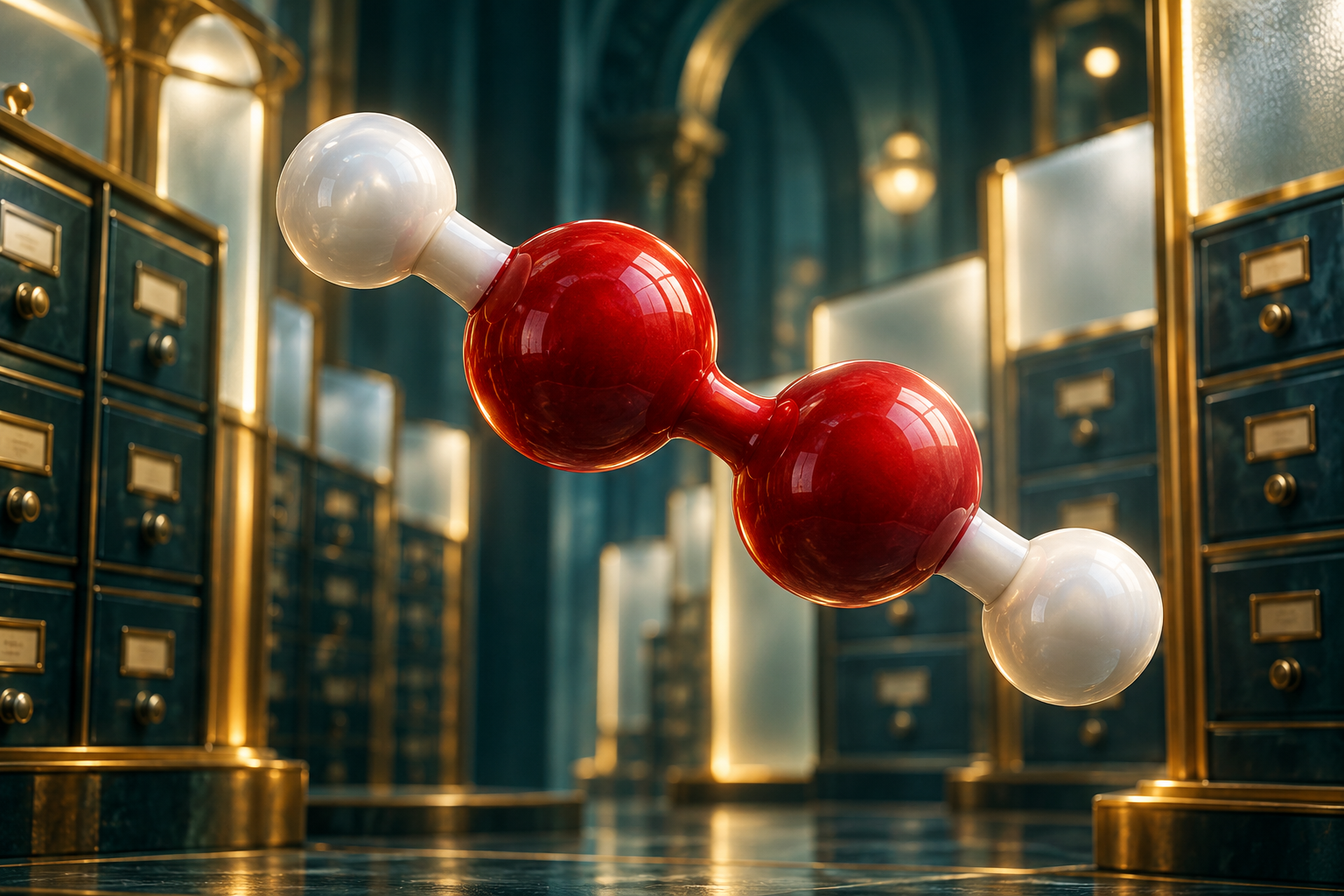
H₂O₂ is also different from 2H₂O. The first is the formula for hydrogen peroxide. The second means two water molecules. Their similar-looking letters do not make the substances equivalent.
Where to look on your paperwork
An SDS commonly identifies ingredients and their CAS numbers in Section 3. Section 1 identifies the supplied product. Use both: one connects you to the chemical identity, while the other helps connect the document to the container.
If a number is unreadable or the documents disagree, ask the supplier to clarify rather than guessing from the bottle’s appearance. Once the product is identified, its label and hazard statements—not the CAS number—tell you the precautions to follow.
