
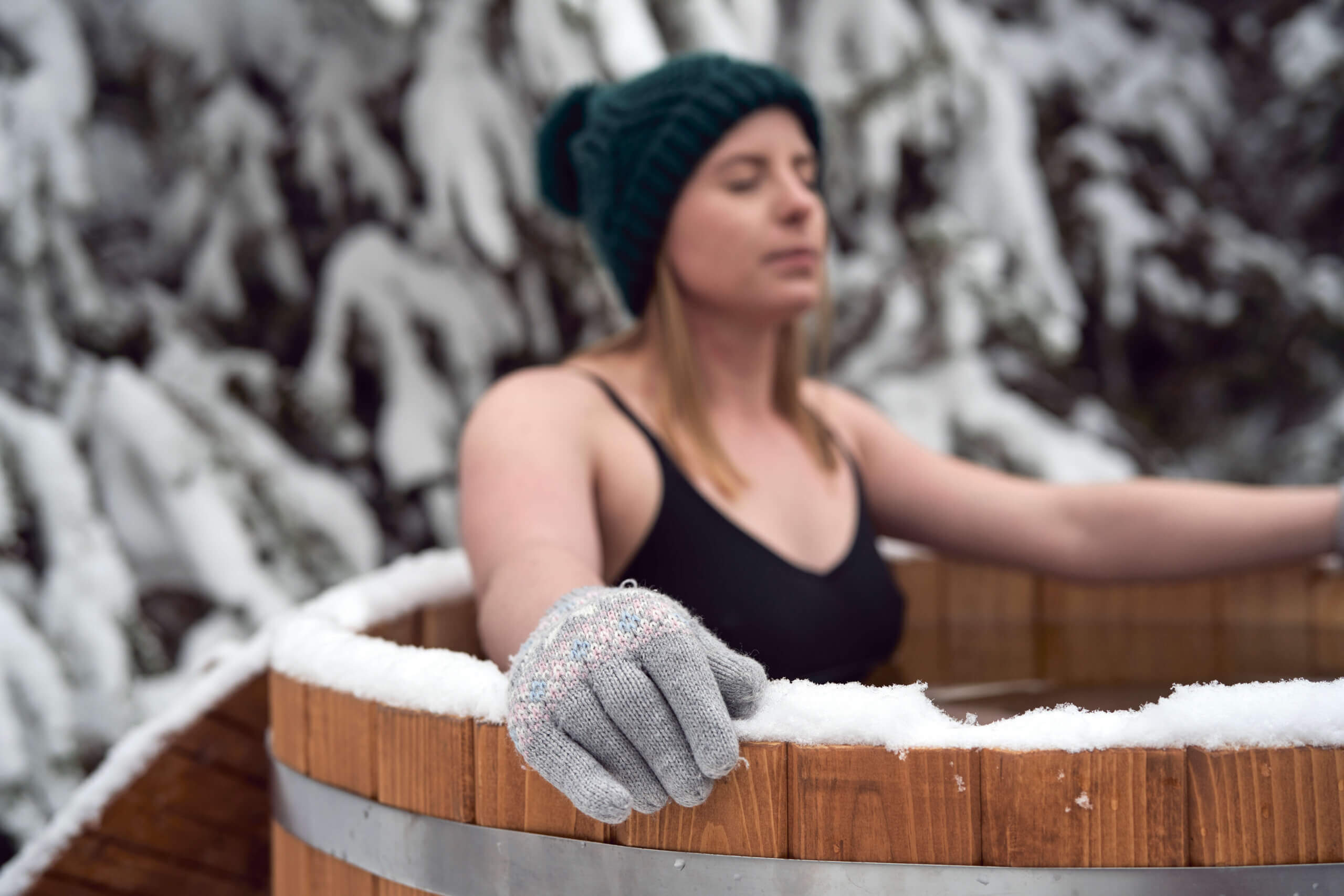
Keep your cold plunge at 50–100 ppm hydrogen peroxide
Most plunges hold about 100 gallons, so the right amount is a few ounces, often just a few tablespoons. Here's how to get it right with 12% or 35%.
Cold plunge owners who use hydrogen peroxide typically hold it between 50 and 100 parts per million (ppm), the same range as a hot tub or pool. The difference is scale: most cold plunges hold around 100 gallons, so the amount you add is a few fluid ounces, often just a few tablespoons. You need three numbers: how much water your plunge holds, the strength of the peroxide you pour in, and what your test strip reads right now. The calculator below works it out for 12% or 35% hydrogen peroxide.
Cold plunge dose chart
Total amount to reach each level from a 0 ppm reading.
 35%Hydrogen peroxide
| Plunge size | 50 ppm | 80 ppm | 100 ppm | +10 ppm |
|---|---|---|---|---|
| 80 galBarrel / upright | 1.3 | 2.1 | 2.6 | 0.3 |
| 100 galLay-down tub | 1.6 | 2.6 | 3.2 | 0.3 |
| 125 galLarge tub | 2.0 | 3.2 | 4.0 | 0.4 |
| 150 galLarge tub / stock tank | 2.4 | 3.9 | 4.9 | 0.5 |
 12%Hydrogen peroxide
| Plunge size | 50 ppm | 80 ppm | 100 ppm | +10 ppm |
|---|---|---|---|---|
| 80 galBarrel / upright | 4.1 | 6.5 | 8.2 | 0.8 |
| 100 galLay-down tub | 5.1 | 8.2 | 10 | 1.0 |
| 125 galLarge tub | 6.4 | 10 | 13 | 1.3 |
| 150 galLarge tub / stock tank | 7.7 | 12 | 15 | 1.5 |
 Small amounts, so measure carefully. 1 fl oz = 2 tablespoons (about 30 mL). Already have some in the plunge? Use the green +10 ppm column for each 10 ppm you need. Get test strips →
Cold Plunge Peroxide Calculator
Enter your cold plunge's gallons, then see how much 12% or 35% hydrogen peroxide brings it into the 50–100 ppm range. Most plunges hold about 100 gallons, so we show it in fluid ounces and tablespoons.
How many gallons does your cold plunge hold?
Use the number from your owner’s manual. Don’t have it handy? Tap the closest type to start.
Typical sizes fill in the middle of each range. Your manual’s number is always better. Small inflatable and folding ice baths often hold 60–100 gallons; stock tanks are sold by capacity (usually 100 or 150 gallons), but you fill them a few inches short of the rim.
Choose your hydrogen peroxide
Both reach the same ppm. The difference is how much you pour.
What does your test strip read?
Dip a strip and match the color. Fresh fill? Leave it at 0.
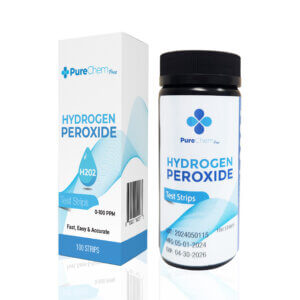
Hydrogen Peroxide Test StripsRead 0–100 ppm · 50 strips per bottle
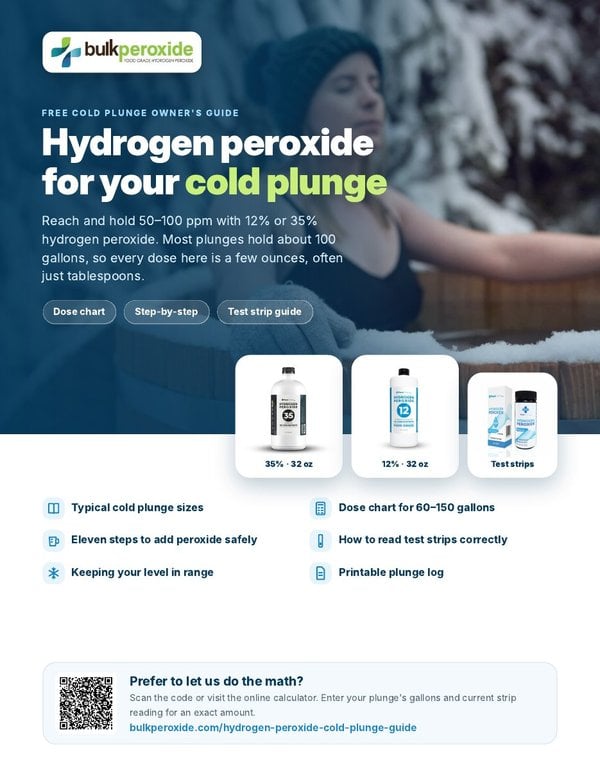
Free PDF guide
Take the cold plunge peroxide guide with you
- Dose chart, 60–150 gal
- Test strip guide
- Printable plunge log
9 pages · by email (and text, if you like)
Check your inbox
We sent a download link to . It can take a minute to arrive. Don't see the email? Check your spam or promotions folder.
Why Cold Plunges Are Different
The target range is the same, but a few things about a cold plunge change how much you add and how often you check.
Tiny amounts
In about 100 gallons, a few tablespoons makes a real difference. Measure every dose with a marked cup or measuring spoon.
Cold water
Hydrogen peroxide breaks down more slowly in cold water, so your reading usually holds longer than in a hot tub.
One person at a time
Fewer people per plunge than a hot tub, but body oils, lotion and sweat still use it up. Rinse off before you get in.
Chiller & lid
Keep the circulation running while you add peroxide and keep it off the chiller housing and lid.
What 50–100 ppm Means in a Cold Plunge
100 ppm
is 0.01% hydrogen peroxide by weight
~3.2 fl oz
of 35% (about 6½ tablespoons) brings 100 gallons from 0 to 100 ppm
~10 fl oz
of 12% brings 100 gallons from 0 to 100 ppm
Parts per million describes how much hydrogen peroxide is in the water by weight. A bottle of 35% is 350,000 ppm, so a little goes a long way in a small plunge. The calculator works by weight: it figures out how many grams your plunge needs to rise from your current reading to your target, then converts that to the fluid ounces of 12% or 35% solution that contain it.
Follow your plunge maker first. Some cold plunge makers recommend their own water-care product or a different peroxide level, especially if the unit has a built-in ozone or UV system. If your manual gives a range, use it.
How Many Gallons Does Your Cold Plunge Hold?
The best number is the one from your owner’s manual or the maker’s spec sheet. Cold plunges aren’t very big: published capacities for popular models mostly fall between about 80 and 140 gallons. If you can’t find yours, these ranges are a reasonable starting point:
90–110 gal
Lay-down tub with chiller
120–150 gal
Large or two-person tub
~100 gal
DIY stock tank
Fill level matters. Small inflatable and folding ice baths often hold 60–100 gallons. Stock tanks are sold by capacity (usually 100 or 150 gallons), but most people fill them a few inches below the rim, so the water in them is less than the label. If you’re estimating, start at the low end, add three quarters of the amount, and let your test strip tell you how much more you need.
Before You Start
Test strips
Have hydrogen peroxide test strips that read 0–100 ppm.
Goggles & gloves
Splash-proof goggles and nitrile or butyl rubber gloves.
A small measure
A clean plastic cup with ounce markings or a measuring spoon, used only for peroxide. Never metal.
Read the SDS
Check your equipment
Ask your plunge’s maker about hydrogen peroxide at 50–100 ppm with your tub, liner, chiller, pump and filter.
Ozone & UV
If your plunge has an ozone generator, UV light or another built-in water system, check with the manufacturer before adding peroxide.
Other water care
Don’t combine peroxide with chlorine, bromine or other oxidizers, and ask the maker before mixing it with any other water-care product.
This guide is for personal, residential cold plunges. Commercial and shared plunges follow the water-treatment requirements set by their local health department.
Switching From Chlorine or Another Product? Start With Fresh Water
Chlorine and bromine compete with hydrogen peroxide. When they meet in the water, they react with and use up each other, so anything left in the plunge eats into the peroxide you add. Because a plunge is small, the cleanest way to switch is to drain, clean and refill.
- Stop adding the old product and take out any floaters or cartridges that go with it.
- Drain the plunge, clean or replace the filter as your manufacturer recommends, and wipe down the tub.
- Refill with fresh water and let the chiller bring it down to temperature.
- Add peroxide using the calculator, starting from a zero reading.
Never add hydrogen peroxide and chlorine or bromine at the same time, and never mix them in a cup or container.
How to Add Hydrogen Peroxide to Your Cold Plunge
- Lid offTake the lid off and set it aside while you add peroxide and for a little while after.
- Circulation onRun the chiller or circulation pump so the peroxide mixes in right away.
- Pour slowly near the returnMeasure into a clean plastic cup and pour close to the water near the return outlet. Keep it off the tub walls, lid and chiller (see the red marker).
- Wait, then testLet it circulate 15 to 20 minutes, then dip a test strip away from where you poured.
- Test first. Dip a test strip and note your current reading.
- Work out your amount with the dose chart or calculator above, using that reading.
- Nobody in the plunge while you add peroxide, including pets.
- Take the lid off and set it aside.
- Make sure the chiller or circulation pump is running so the water is moving.
- Put on goggles and gloves.
- Measure about three quarters of the amount into a clean plastic cup or measuring spoon.
- Pour slowly and close to the water near the return outlet so it mixes in right away. Keep it off the tub walls, the lid and the chiller housing, where concentrated peroxide can bleach or damage surfaces.
- Rinse the cup and any drips with plenty of water.
- Let it circulate for 15 to 20 minutes, then test again and top up in small amounts until the strip reads in your target range.
- Put the lid back on. Plunge once the strip reads 50–100 ppm.
How to Use Hydrogen Peroxide Test Strips
Your test strip is how you avoid both underdosing and overdosing. The strips change color across roughly 10 to 100 ppm, exactly the range a plunge runs in. In a small plunge a few tablespoons moves the reading a lot, so always test before adding more.
Illustration only. The pad darkens as the peroxide level rises; always match against the color chart printed on your strip bottle.
Hydrogen Peroxide Test Strips0–100 ppm · 50 strips per bottle · keep the cap tight and the strips dry
Keeping Your Cold Plunge at 50–100 ppm
Hydrogen peroxide slowly breaks down into water and oxygen. Cold water slows that down, but these still use it up:
How often you plunge
Daily plunges, or several people sharing, use it up faster.
Lotion, oils & sweat
A quick rinse before you get in keeps more of it in the water.
Debris
Leaves and dirt use it up. Keep the lid on between plunges.
Warmer water
If the chiller is off or it’s a hot day, the level drops faster.
- Test every day or two at first to learn how fast your plunge uses it, then test before you plunge.
- Top up before you hit 50 ppm. Use the +10 ppm column in the dose chart or the calculator.
- Keep a simple log of the date, reading and amount added.
- Look after the filter on the schedule your manufacturer recommends.
- Drain and refill on schedule. When you refill, start over from a zero reading.
- Keep up any water-balance testing, such as pH, that your plunge maker recommends.
12% or 35%: Which Should You Use?
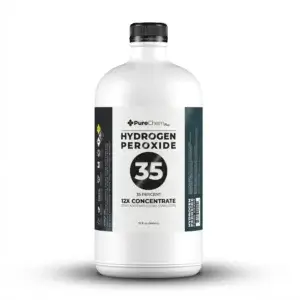
35%Hydrogen peroxide- About 3.2 fl oz (6½ tablespoons) brings 100 gallons to 100 ppm
- A 32 oz bottle covers about 10 full fills from zero, plus top-ups
- More concentrated, so measure carefully and handle with extra care
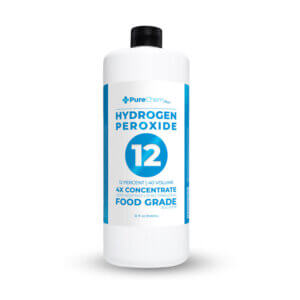
12%Hydrogen peroxide- About 10 fl oz brings 100 gallons to 100 ppm
- Bigger pours make tiny top-ups easier to measure
- Less concentrated, but still needs goggles and gloves
Both reach the same ppm in your plunge; the difference is how much you measure and pour. For a plunge, the 32 oz bottles last a long time. Check each product page for shipping options, since container size and concentration affect how it ships.
Handling and Storage
Protect eyes & skin
Wear splash-proof goggles and chemical-resistant gloves whenever you handle concentrated peroxide.
Original container
Tightly closed and upright, in a cool, dark, ventilated place out of direct sun.
Store it separately
Away from chlorine, bromine, acids, metals and anything flammable.
No pouring back
Never return unused peroxide to the bottle, and never use metal cups or spoons.
Lock it up
Keep it away from children and pets.
If it splashes
Eyes: rinse with clean water for at least 15 minutes and get medical help. Skin: rinse thoroughly. Follow the SDS first-aid section.
Frequently Asked Questions
How much 35% hydrogen peroxide do I need for my cold plunge?
About 3.2 fluid ounces (roughly 6½ tablespoons) for a 100-gallon plunge to go from 0 to 100 ppm, or about 2.6 fluid ounces to reach 80 ppm. Use the calculator for your exact size and current reading.
How much 12% hydrogen peroxide do I need?
About 10 fluid ounces for a 100-gallon plunge to go from 0 to 100 ppm, or about 8 fluid ounces to reach 80 ppm.
Can I use 3% hydrogen peroxide from the store?
It would take about 43 fluid ounces of 3% to bring a 100-gallon plunge to 100 ppm, more than a typical 32 oz bottle. 12% or 35% means much smaller pours.
How often should I test?
Every day or two for the first week to learn how fast your plunge uses it, then before you plunge. Cold water slows breakdown, so many plungers find the level holds for several days.
Can I use hydrogen peroxide with an ozone or UV system?
Check with your cold plunge’s manufacturer first. Built-in water systems vary, and some makers recommend a lower peroxide level when ozone is running.
My test strip didn’t change color right after I added peroxide. Why?
A strip dipped into concentrated peroxide, or into the spot where you just poured, gets overloaded and burns out, showing no color at all. Let it circulate 15 to 20 minutes, then test a few inches down, away from the return outlet.
What if my reading is over 100 ppm?
Stop adding peroxide and keep the circulation running. The level comes down on its own as the peroxide breaks down, more slowly in cold water. Retest before plunging and wait until the strip reads 100 or below.
Can I add peroxide while I’m in the plunge?
No. Stay out while you add it, and until the water has circulated and a test strip reads within 50–100 ppm.
Is the calculator exact?
The chemistry is exact, but plunge volumes are estimates and strips read in steps. That’s why the calculator has you add about three quarters first, then retest and top up.
Free PDF guide
Take the cold plunge peroxide guide with you
- Dose chart, 60–150 gal
- Test strip guide
- Printable plunge log
9 pages · by email (and text, if you like)
Check your inbox
We sent a download link to . It can take a minute to arrive. Don't see the email? Check your spam or promotions folder.
Have a hot tub or pool too? See our hot tub guide and pool guide, each with its own calculator and dose chart.
Disclaimer
Information only, used at your own risk. This page, the dose chart and the calculator are general information provided for convenience. They are not professional, engineering, medical or legal advice. Results are estimates that depend on the measurements, test readings and other information you enter, and on conditions we cannot see or control. You are solely responsible for deciding whether and how to use hydrogen peroxide in your cold plunge, and for every amount you add.
No claims about water treatment. This guide explains how to reach and hold a hydrogen peroxide concentration. It makes no claim that hydrogen peroxide sanitizes or disinfects water or controls any organism, and our products are not sold as registered sanitizers. Commercial and shared plunges must follow the requirements of their local health authority.
Equipment, surfaces and property. Hydrogen peroxide is a strong oxidizer. Before use, confirm compatibility with the manufacturer of your cold plunge, including the tub, liner, chiller, pump, filter, lid, ozone or UV system and any other equipment. We are not responsible for damage to plunges, equipment, surfaces, finishes, floors, clothing or any other property, or for voided warranties, resulting from the use or misuse of hydrogen peroxide or of the information on this page.
Skin sensitivity and cold exposure. Some customers with sensitive skin have told us they notice a slight tingling at levels around 120 ppm and above. This is customer feedback, not a tested threshold, and sensitivity varies from person to person. If you feel irritation, get out and rinse with fresh water, stay out until the level comes down, and seek medical advice if irritation continues. Cold water immersion is not right for everyone: follow your plunge maker’s guidance on water temperature and time, and talk to a doctor before plunging if you have a heart condition or other health concern, or are pregnant.
Handling. Concentrated hydrogen peroxide can cause serious burns to skin and eyes. Always follow the product label and Safety Data Sheet, wear protective equipment, and keep it away from children and pets.
Limitation of liability. To the fullest extent permitted by law, Bulk Peroxide and its owners, employees and affiliates disclaim all warranties, express or implied, regarding this information, and are not liable for any direct, indirect, incidental, consequential or other damages, including personal injury, property damage or loss, arising from the use of this page, the calculator, or our products in a cold plunge. By using this information you accept these terms. Nothing here limits any rights you have that cannot be limited under applicable law.