

Hydrogen peroxide for fountains and water features
How decorative fountain owners measure peroxide in parts per million when they top up and refresh the water, plus a cleaning mix for the basin and pump.
Owners of decorative fountains and water features often add a small, measured amount of hydrogen peroxide when they top up and refresh the water. Like pool and hot tub owners, they measure it in parts per million (ppm), and the amounts are small: a 20 gallon fountain at 25 ppm takes about a teaspoon of 35% or a tablespoon of 12%. This page shows how the math works for your fountain size.
Decorative Fountains Only
This guide is for decorative fountains and water features with no fish, plants, frogs or other wildlife living in them. It isn’t for birdbaths, pet fountains, ponds with fish, or any water people or animals use.
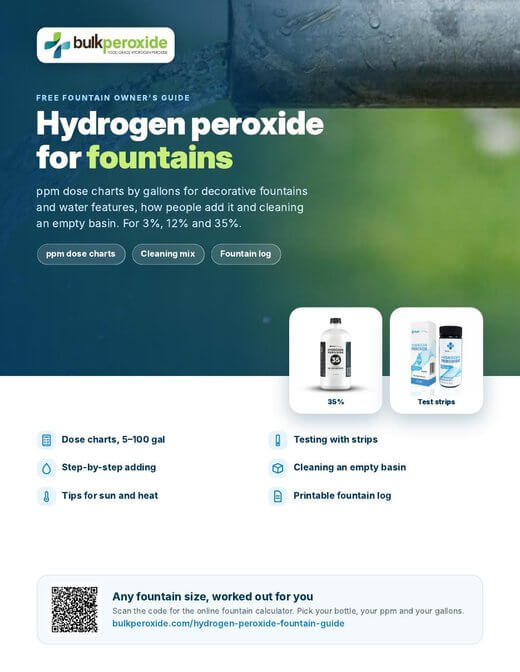
Free PDF guide
Take the fountain guide with you
- Dose charts, 5–100 gal
- Cleaning an empty basin
- Printable fountain log
5 pages · by email (and text, if you like)
Check your inbox
We sent a download link to . It can take a minute to arrive. Don't see the email? Check your spam or promotions folder.
Dose Chart
How much to add, starting from a reading of zero.
For about 25 ppm
| Your peroxide | 5 gal | 20 gal | 50 gal | 100 gal |
|---|---|---|---|---|
| 3% | 1 tbsp0.5 fl oz | ¼ cup2.1 fl oz | ⅝ cup5.3 fl oz | 1⅜ cups10.6 fl oz |
| 12% | ¾ tsp0.1 fl oz | 1 tbsp0.5 fl oz | 2½ tbsp1.3 fl oz | ⅜ cup2.6 fl oz |
| 35% | ¼ tsp0.0 fl oz | 1 tsp0.2 fl oz | 2½ tsp0.4 fl oz | 1½ tbsp0.8 fl oz |
If your test strip already shows some peroxide, add only the difference.
For about 50 ppm
| Your peroxide | 5 gal | 20 gal | 50 gal | 100 gal |
|---|---|---|---|---|
| 3% | 2 tbsp1.1 fl oz | ½ cup4.2 fl oz | 1⅜ cups10.6 fl oz | 2⅝ cups21.1 fl oz |
| 12% | 1½ tsp0.3 fl oz | 2 tbsp1.0 fl oz | ⅜ cup2.6 fl oz | ⅝ cup5.1 fl oz |
| 35% | ½ tsp0.1 fl oz | 2 tsp0.3 fl oz | 1½ tbsp0.8 fl oz | 3¼ tbsp1.6 fl oz |
1 tsp ≈ 4.9 mL; 1 tbsp ≈ 14.8 mL; 1 fl oz = 2 tbsp.
How Many Gallons Is Your Fountain?
1–5 gal
Tabletop and indoor fountains
10–50 gal
Tiered garden and patio fountains
50–200 gal
Wall fountains and larger water features
The maker’s spec sheet is the best number. To measure, note how many gallons it takes to fill from empty, or multiply length × width × depth in inches and divide by 231 for gallons.
How People Add It
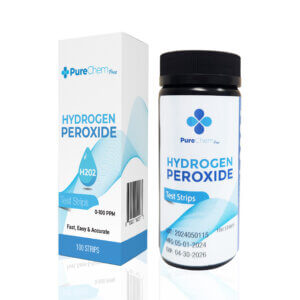
- Test first. Dip a hydrogen peroxide test strip so you know your starting reading.
- Measure the amount with the chart or calculator. Start at the low end.
- Pump on. Pour slowly near where the pump draws water so it mixes in quickly. Keep it off stone, metal and painted finishes.
- Test again after 15 minutes, away from where you poured.
- Top up as needed. Peroxide slowly breaks down to water and oxygen, faster in warm weather and sun.
Cleaning an Empty Fountain
Drain and rinse
Unplug the pump, drain the basin and rinse out loose debris.
Wipe with 3%
Wipe or scrub the basin, bowls and pump housing with store-strength 3%. Test a small area first on natural stone and metal.
Rinse and refill
Rinse everything well with plain water before refilling and plugging the pump back in.
Tips and Cautions
Check your fountain maker
Some pumps, finishes and materials aren’t meant for peroxide. Follow the care instructions for your fountain.
One product at a time
Don’t combine peroxide with chlorine, bromine or other fountain products, and never mix them in a cup.
Sun and heat use it faster
Outdoor fountains in summer usually need testing and topping up more often.
Handle concentrate carefully
Wear goggles and gloves when you measure 12% or 35%, and measure over a sink with a cup or spoon kept just for peroxide.
Store it safely
Keep bottles capped, cool and dark, labeled, and out of reach of children and pets.
If it splashes
Eyes: rinse with clean water for at least 15 minutes and get medical help. Skin: rinse thoroughly. Follow the SDS first-aid section.
Frequently Asked Questions
How much hydrogen peroxide do I add to my fountain?
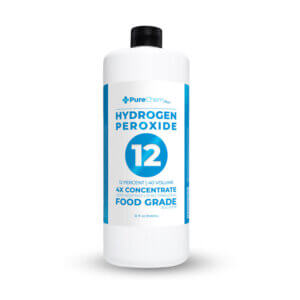
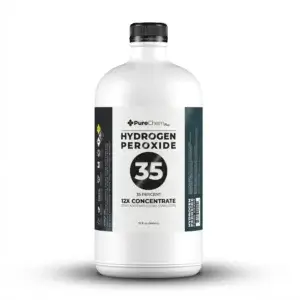
For about 25 ppm in 20 gallons, roughly 1 teaspoon of 35% or 1 tablespoon of 12%. Use the calculator for your size and test after adding.
What ppm do people use?
Fountain owners mostly describe staying between about 25 and 50 ppm. Start at the low end and test.
Can I use it if there are fish or plants in the water?
No. This guide is for decorative fountains with nothing living in them.
Is it safe for my fountain pump?
Check with the pump and fountain maker. Some materials don’t hold up to peroxide.
How often should I add it?
Test every few days. Peroxide breaks down over time, so most people top up when the strip shows it dropping.
Need a different strength? Our dilution calculator works out any mix from 3%, 6%, 12% or 35%. See all our guides and calculators.
Free PDF guide
Take the fountain guide with you
- Dose charts, 5–100 gal
- Cleaning an empty basin
- Printable fountain log
5 pages · by email (and text, if you like)
Check your inbox
We sent a download link to . It can take a minute to arrive. Don't see the email? Check your spam or promotions folder.
Disclaimer
Information only, used at your own risk. This page and calculator share general information about how owners of decorative fountains measure and add hydrogen peroxide. Fountains, pumps and finishes vary, so follow your fountain maker’s instructions. Results are estimates based on what you enter. You are responsible for how you mix and use hydrogen peroxide.
No product claims. Nothing on this page is a claim that hydrogen peroxide treats water or controls any organism. It is not for water with fish, plants or wildlife, or water used by people or animals.
Handling. Concentrated hydrogen peroxide can cause serious burns to skin and eyes and can damage clothing and surfaces. Follow the product label and Safety Data Sheet, wear protective equipment, and keep it away from children and pets.
Limitation of liability. To the fullest extent permitted by law, Bulk Peroxide disclaims all warranties regarding this information and is not liable for any damages, including damage to fountains, pumps, stone, metal or finishes, arising from its use.