
Mix any strength of hydrogen peroxide in three taps
Pick the bottle you have, the strength you want and how much to make. You get exact amounts of peroxide and distilled water, in cups, ounces or milliliters.
Your recipe
- 1Measure the water into a clean plastic or glass container.
- 2Add the peroxide slowly to the water, never water into concentrate.
- 3Cap, swirl gently and label it with the new strength and date.
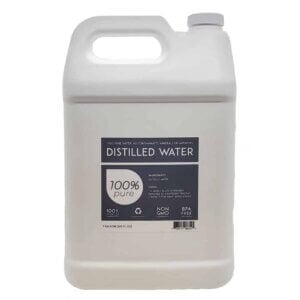
Always dilute with distilled or deionized water
Tap, well and filtered water carry minerals and trace metals that make hydrogen peroxide break down faster, so your mix loses strength before you use it. Distilled or deionized (DI) water keeps it at the strength you made. We sell DI water alongside our peroxide, or you can pick up a jug of distilled water at almost any grocery store.
Amounts are calculated by weight using the density of each strength, which is how peroxide percentages are measured, then converted to volume. That's why the amounts can differ slightly from simple "1 part to 11 parts" rules of thumb. Small measuring differences won't matter for everyday mixing; for precise work, check the result with a hydrogen peroxide test method suited to that range.
Free PDF guide
Take the dilution charts with you
- Every strength, cup to 5 gal
- Density-corrected
- Printable mixing log
5 pages · by email (and text, if you like)
Check your inbox
We sent a download link to . It can take a minute to arrive. Don't see the email? Check your spam or promotions folder.
Quick Dilution Chart
The most common mixes at a glance. Each cell shows how much peroxide to measure, plus how much distilled water to add, to end up with one gallon.
| Starting with | Make 12% | Make 6% | Make 3% | Make 1% | Make 0.5% |
|---|---|---|---|---|---|
| 35% | 40.5 oz+ 87.8 oz water | 19.8 oz+ 108 oz water | 9.8 oz+ 118 oz water | 3.2 oz+ 125 oz water | 1.6 oz+ 126 oz water |
| 12% | — | 62.6 oz+ 65.4 oz water | 31 oz+ 97.1 oz water | 10.3 oz+ 118 oz water | 5.1 oz+ 123 oz water |
| 6% | — | — | 63.3 oz+ 64.7 oz water | 20.9 oz+ 107 oz water | 10.5 oz+ 118 oz water |
Amounts make 1 gallon (128 fl oz) of finished solution. 1 cup = 8 fl oz; 1 fl oz = 2 tablespoons. Need a different amount? Use the calculator above.
How to Dilute Hydrogen Peroxide
- Pick a clean container. Use plastic (HDPE or PET) or glass with a cap. Skip metal containers, and don’t reuse a bottle that held another product.
- Gear up for strong peroxide. With 12% and 35%, wear splash-proof goggles and chemical-resistant gloves, and work somewhere you can rinse a spill with water.
- Water first. Measure the distilled or DI water into the container.
- Add the peroxide slowly. Pour the measured peroxide into the water. Adding concentrate to water, not water to concentrate, keeps splashes dilute.
- Cap, swirl and label. Swirl gently to mix, then write the new strength and the date on the container.
- Store it cool and dark. Light and heat break peroxide down over time. Mix what you’ll use in the next few weeks rather than months ahead.
Which Strength Should You Buy?
Higher strengths cost less per gallon of finished mix and take up less shelf space. Lower strengths are easier to handle.
3% store strength
Ready to use as is, with no mixing. A good fit if you only need 3% and would rather skip handling concentrate. Shop 3%
12% concentrate
Makes 4 times its volume of 3%. A middle ground: much less to store than 3%, and gentler to handle than 35%. Shop 12%
35% concentrate
One gallon makes about 13 gallons of 3%. The best value for big batches, but it needs goggles, gloves and careful measuring. Shop 35%
Handling and Storage
Protect eyes & skin
Wear splash-proof goggles and chemical-resistant gloves whenever you handle 12% or 35% peroxide.
Keep it capped
Store upright with the cap on, in a cool, dark place out of direct sun.
Never mix chemicals
Mix peroxide only with distilled or DI water. Never combine it with bleach, vinegar, ammonia or other products.
No pouring back
Never return unused or diluted peroxide to the original bottle.
Lock it up
Keep concentrate and mixes away from children and pets, clearly labeled.
If it splashes
Eyes: rinse with clean water for at least 15 minutes and get medical help. Skin: rinse thoroughly. Follow the SDS first-aid section.
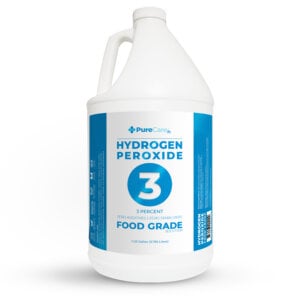 3% Food Grade Hydrogen Peroxide Solution 1 Gallon
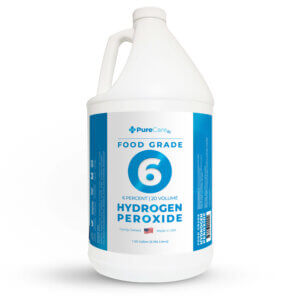 6% Food Grade Hydrogen Peroxide Solution 1 Gallon
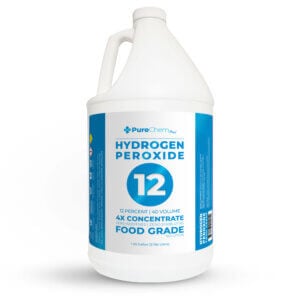 12% Food Grade Hydrogen Peroxide Solution 1 Gallon
 35% Food Grade Hydrogen Peroxide 1 GallonDeionized Distilled Water
 Continuous Spray White Flairosol Bottle 16oz (500ml)
Frequently Asked Questions
How do I make 3% hydrogen peroxide from 35%?
For one gallon of 3%, mix about 9.8 fl oz (a little over 1¼ cups) of 35% into about 118 fl oz of distilled water. For a 16 oz spray bottle, it’s about 1¼ fl oz (2½ tablespoons) of 35% topped up with distilled water.
How do I make 3% from 12%?
Mix 1 part 12% with about 3 parts distilled water. For a gallon, that’s about 31 fl oz of 12% and 97 fl oz of water, which is why a 32 oz bottle of 12% makes roughly a gallon of 3%.
Why not just use “1 part 35% to 11 parts water”?
Peroxide strength is measured by weight, and 35% is about 13% heavier than water. Mixing purely by volume gives you closer to 3.3% than 3%. Our calculator accounts for that, so it calls for slightly less 35%. Either way works for everyday mixing; the calculator just gets you closer to the number on the label.
Can I use tap water or filtered water?
We recommend distilled or deionized water. Minerals and trace metals in tap, well and many filtered waters speed up breakdown, so the mix weakens faster. Distilled water from the grocery store or our deionized distilled water both work.
How long does diluted peroxide last?
Lower strengths lose strength faster than concentrate, especially in light or heat. Store your mix capped in an opaque container, somewhere cool and dark, and make fresh batches every few weeks.
What container should I store the mix in?
A clean, opaque plastic (HDPE) or dark glass bottle with a cap. A fine-mist sprayer like our continuous spray bottle is handy for small amounts. Label every container with the strength and date.
Can I make a stronger mix from a weaker one?
No. Adding water only lowers the strength. To make 12%, start with something stronger, like 35%.
Using peroxide in a pool, hot tub, cold plunge, fountain or well tank? Those are dosed in parts per million rather than percent. Use our pool calculator, hot tub guide, cold plunge guide, fountain guide or well system guide instead. For cleaning, laundry, carpet, seeds, sprouting and more, see all our guides and calculators.
Free PDF guide
Take the dilution charts with you
- Every strength, cup to 5 gal
- Density-corrected
- Printable mixing log
5 pages · by email (and text, if you like)
Check your inbox
We sent a download link to . It can take a minute to arrive. Don't see the email? Check your spam or promotions folder.
Disclaimer
Information only, used at your own risk. This calculator and chart are general information provided for convenience. Results are estimates based on the strengths and amounts you enter and on typical densities; actual product strength can vary by lot and age. You are responsible for how you mix, store and use hydrogen peroxide.
Handling. Concentrated hydrogen peroxide can cause serious burns to skin and eyes and can damage clothing and surfaces. Always follow the product label and Safety Data Sheet, wear protective equipment, and keep it away from children and pets.
Limitation of liability. To the fullest extent permitted by law, Bulk Peroxide disclaims all warranties regarding this information and is not liable for any damages arising from its use. Nothing here limits rights you have that cannot be limited under applicable law.