
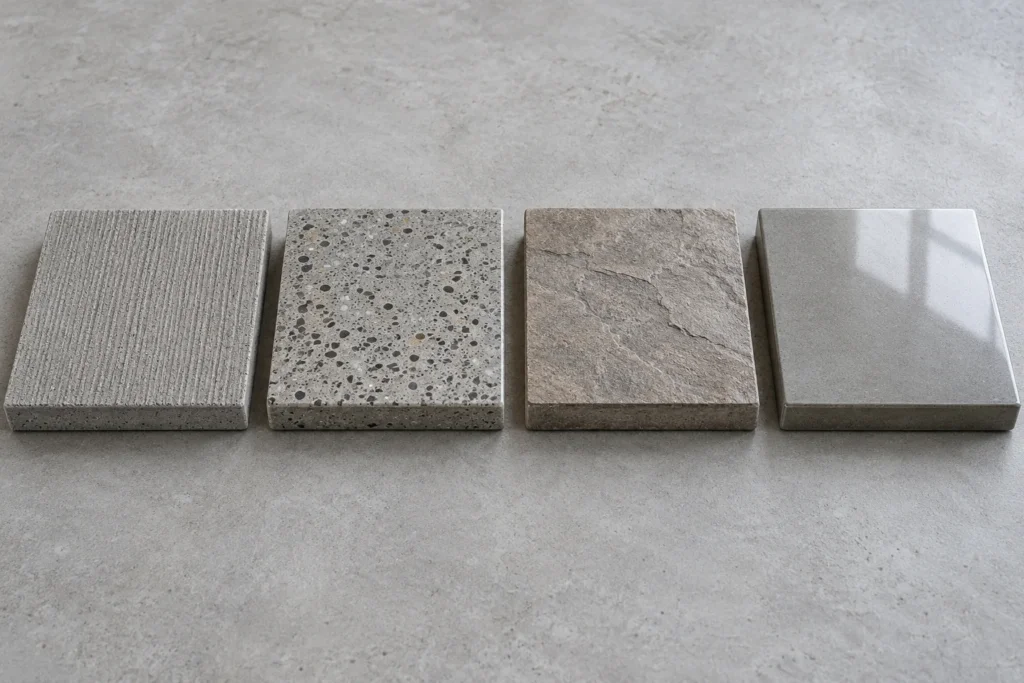
Hydrogen peroxide is not a one-size-fits-all concrete cleaner. A product formulated for concrete may contain peroxide, but that does not make plain peroxide—or concentrated peroxide—a suitable substitute. The right choice depends on the concrete’s finish and what you are trying to remove.
A dusty garage floor, an oil mark on a driveway and a dull patch on a sealed patio are three different problems. Treating all three with the same stronger cleaner can leave the original problem in place and change the surrounding surface.
First, find out what you are actually cleaning
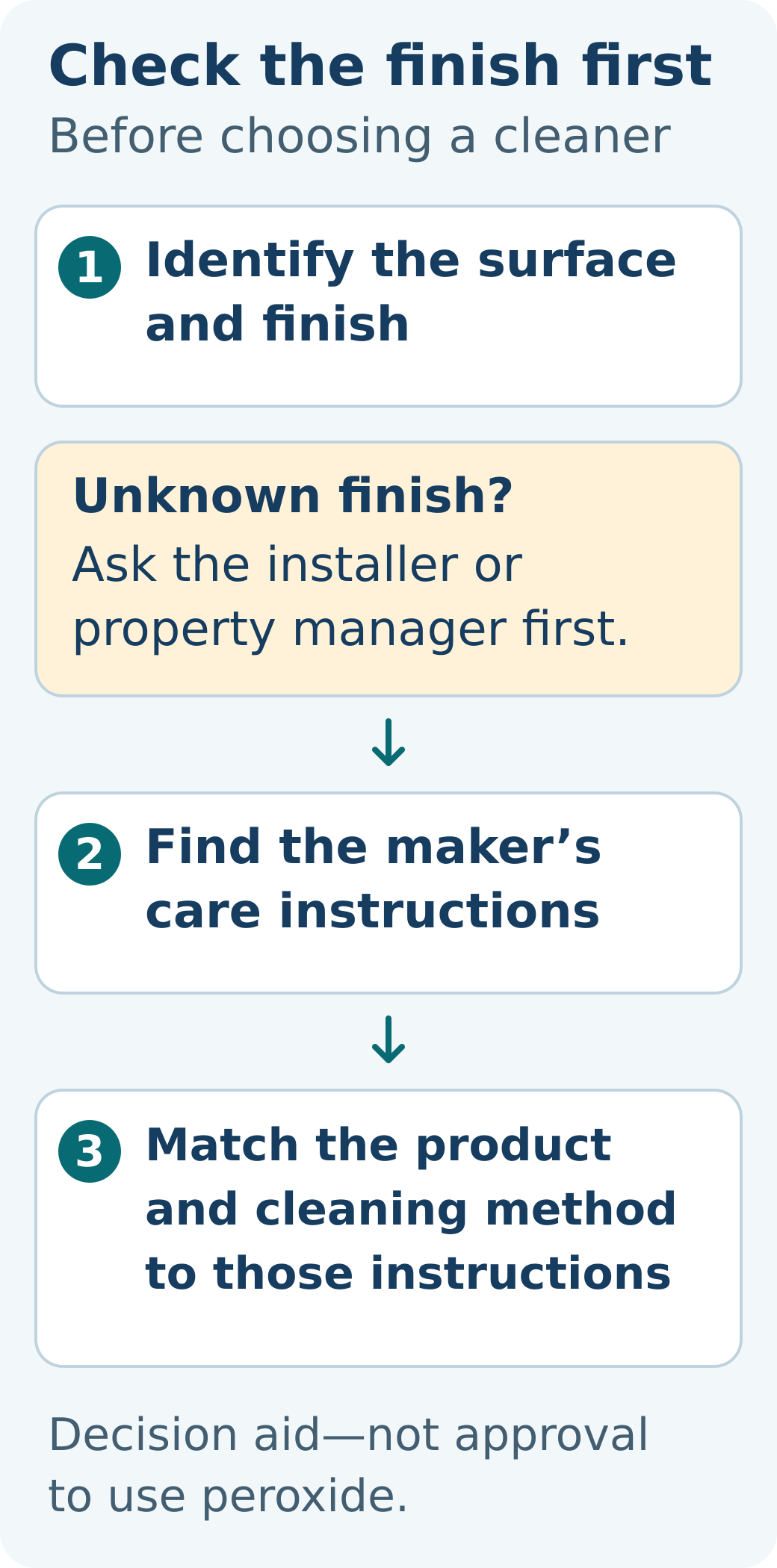
Concrete can be bare, sealed, polished or covered with a coating. You may be cleaning the concrete itself, or a protective layer above it. An invoice, leftover product container or installer’s record is more reliable than guessing from the shine.
| Surface | What matters | Useful next step |
|---|---|---|
| Bare concrete | Its pores can absorb both stains and cleaning solutions. | Identify the stain before choosing a concrete-specific treatment. |
| Sealed concrete | The cleaner must suit the sealer as well as the slab. | Find the sealer’s name and maintenance instructions. |
| Polished concrete | The finished appearance matters; local treatment may leave a visible difference. | Use the installer’s care method rather than treating it like an unfinished driveway. |
| Painted or resin-coated concrete | The coating is the surface in contact with the cleaner. | Use the coating system’s care instructions. |
The Concrete Society explains that concrete is porous and chemically reactive. Cleaning can change its color or texture, and some stains cannot be fully removed. A small cleaned spot may therefore look different from the rest of the slab.
Is it dirt, a stain or a damaged finish?
- Loose dirt and tracked-in grit: start with routine maintenance. For its sealed surfaces, W. R. Meadows recommends removing grit and using a mild cleaner rather than harsh or abrasive products.
- A localized oil or rust mark: routine floor washing and stain treatment are not interchangeable. Identify the material that caused the mark and choose a treatment intended for that stain and finish.
- A dull, pale or peeling patch: do not assume it needs more cleaning. If the finish has changed, contact the installer or coating supplier before applying another chemical.
For a sealed patio, for example, the useful question is not simply “Will peroxide remove this spot?” It is “What caused this spot, and what treatment does this sealer allow?” The W. R. Meadows maintenance guide also points out that a sealer does not make concrete completely stain-resistant.
A peroxide-containing cleaner is not plain peroxide
A formulated cleaner can contain several ingredients that work together, with directions for dilution, contact time and rinsing. Continental Research’s Ox-E2-Power technical sheet, for example, describes a concrete cleaner containing peroxide and d-limonene. It is evidence about that product—not a recipe for mixing those ingredients or a reason to apply stock peroxide.
Use a cleaner only for the surfaces and conditions its instructions cover. Do not improvise a mixture or apply 35% peroxide as a household concrete-cleaning experiment.
What a test spot can—and cannot—tell you
Once you have selected a method supported for the finish, use the recommended test-area procedure in an inconspicuous location. Inspect the area after it dries, not just while it looks wet. Compare color, sheen and texture with the adjacent surface.
A good-looking test spot does not prove that an otherwise unsupported chemical is compatible. It is a final check within an appropriate method, not a substitute for identifying the finish.
If your project includes adjoining tile, our tile and grout guide explains why one cleaner may need to suit several materials. For chemical paperwork, the SDS versus COA guide explains why a safety sheet and a batch test report answer different questions; neither is a concrete-care approval.
