
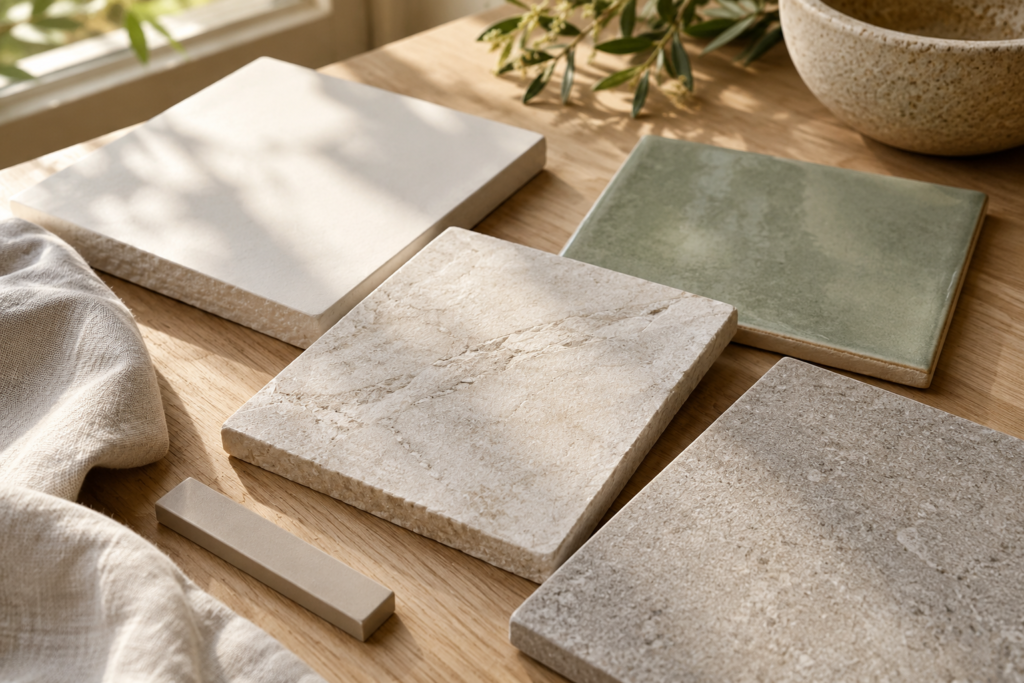
Choose a tile cleaner for the whole surface: the tile, the grout and any sealer or coating. A product that suits a porcelain tile may be wrong for the grout between it. And a marble pattern does not tell you whether the tile is real stone or a printed ceramic surface.
Before buying another cleaner, find the tile and grout names on a spare box, invoice or installation record. Those two names can save a lot of trial and error.
The three details that change your cleaning options
| Part | Useful distinction | Why it matters |
|---|---|---|
| Tile | Ceramic or porcelain versus natural stone | Stone can need different care. Acidic cleaners can etch calcium-rich stones such as marble. |
| Grout | Cement-based, epoxy or another premixed product | Cement-based grout is porous. Epoxy and other products have their own maintenance requirements. |
| Surface treatment | Sealer, grout color coating or another finish | The treatment may add limits beyond those for the tile or grout underneath. |
Porcelain is part of the ceramic tile family, not a type of natural stone. See Daltile’s explanation of ceramic and porcelain. For stone, the Natural Stone Institute’s care guide explains why mineral composition matters and why acidic cleaners are a poor default.
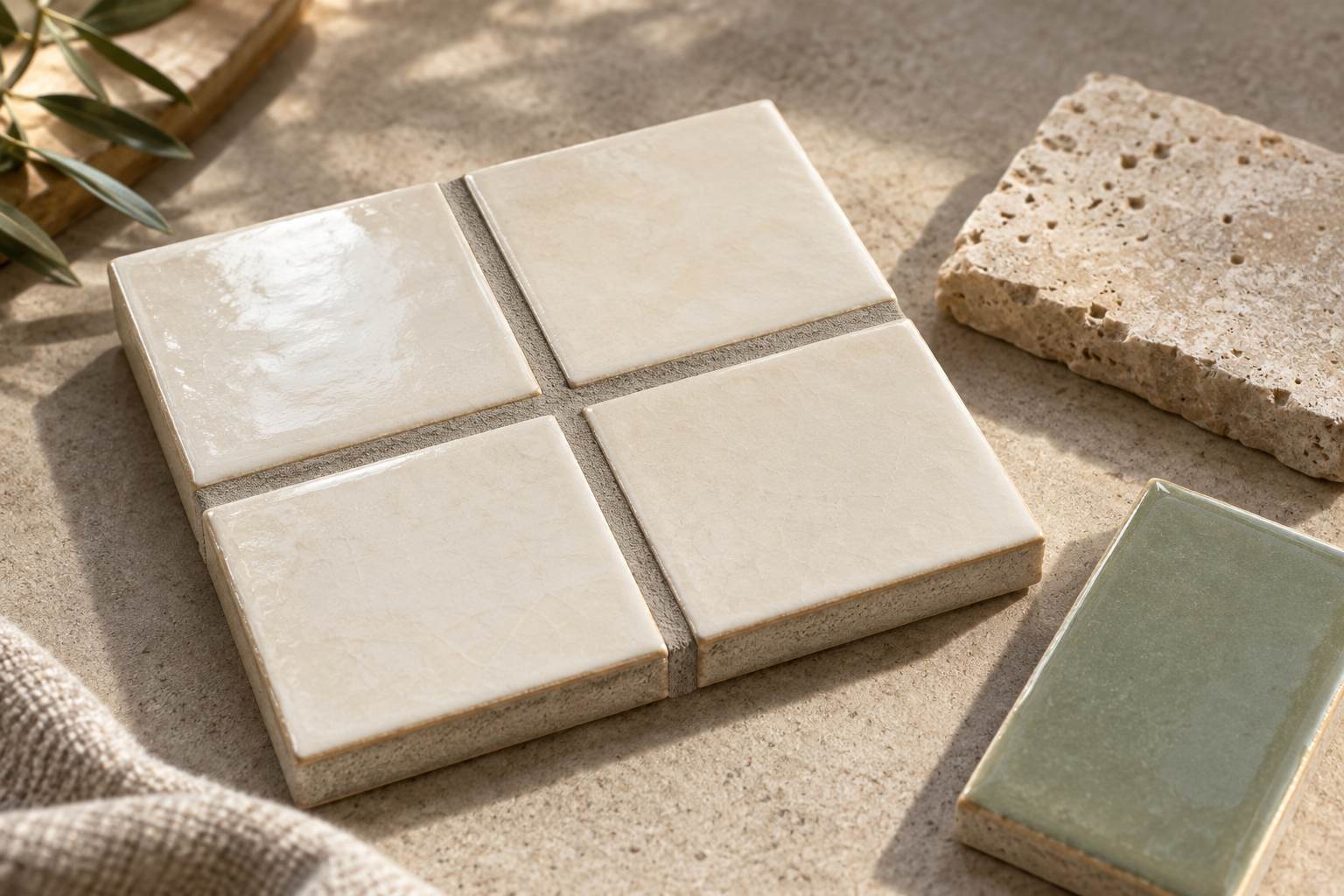
Why grout can still look dirty after mopping
With cement-based grout, more cleaner is not necessarily the answer. The Tile Council of North America notes that oil- or wax-containing cleaners can leave a film. It also emphasizes removing dirty cleaning water and rinse water rather than leaving them on the floor.
Think about a kitchen floor that looks clean while wet but dries with dark grout lines. Before escalating to a harsher treatment, check whether the existing method actually removes the dirty liquid. That is a different problem from a stain within the grout.
TCNA also warns that acid can dissolve cement-based grout. An acid-cleaning tip intended for a different material is not a shortcut for these joints. See its grout-cleaning guidance.
“Sealed” does not mean stain-proof
A sealer may improve stain resistance, but it does not eliminate maintenance. The Natural Stone Institute notes that not every stone needs sealing and that excessive cleaner can leave film or streaks. For stone, it recommends an appropriate neutral cleaner or stone soap, thorough rinsing and drying.
Grout type matters here too. For a concrete example, LATICRETE’s SPECTRALOCK 1 is a premixed grout that the manufacturer says is not epoxy and does not need sealing. Do not assume that every premixed grout is epoxy, or that every joint needs another coat of sealer. Check the specific product. See LATICRETE’s SPECTRALOCK 1 technical FAQ.
Where does hydrogen peroxide fit?
The peroxide percentage alone cannot tell you whether a cleaner suits your tiled surface. You still need directions that cover the tile, grout and finish. A recommendation for uncoated ceramic tile does not automatically extend to a stone border or a colored grout coating.
Do not use concentrated peroxide as a trial treatment or combine cleaning products. If peroxide appears in a formulated cleaner, follow that product’s instructions rather than substituting a bottle of plain peroxide. Our grout-cleaning precautions discuss the limits of peroxide advice; they do not replace the care instructions for your installation.
A practical next step
Write down three things: the tile product, the grout product and any later sealer or color treatment. Then choose one maintenance method that suits all three. For an unknown installation, send the installer or manufacturer a photo together with those records; a photo alone may not establish the material.
If a permitted cleaning method leaves a persistent change in color, texture or sheen, stop treating it as ordinary dirt. Ask whether it is staining, residue or surface damage before trying another chemical. The same distinction matters on sealed and coated concrete.
