

For routine patio umbrella care, remove loose dirt, use the canopy maker’s permitted mild cleaning method, rinse away cleaner and let the umbrella dry completely before covering or storing it. Treat the fabric and frame as separate parts: a canopy-care instruction is not automatically suitable for the pole, joints or crank.
The easiest mistake to avoid is closing everything up too soon. Plan the drying step before you start washing, and choose calm weather so you can safely leave the canopy open while it dries.
Find the umbrella model, not just the fabric name
Look at the canopy label, order confirmation or manual for the umbrella model and fabric. Two umbrellas can use the same named fabric but have different frames, attachments and removal instructions.
If the canopy comes off, that still does not establish that it belongs in a washing machine. Look for explicit washing directions from the umbrella maker. Taking apart the ribs and fabric simply to clean a dusty canopy may be unnecessary.
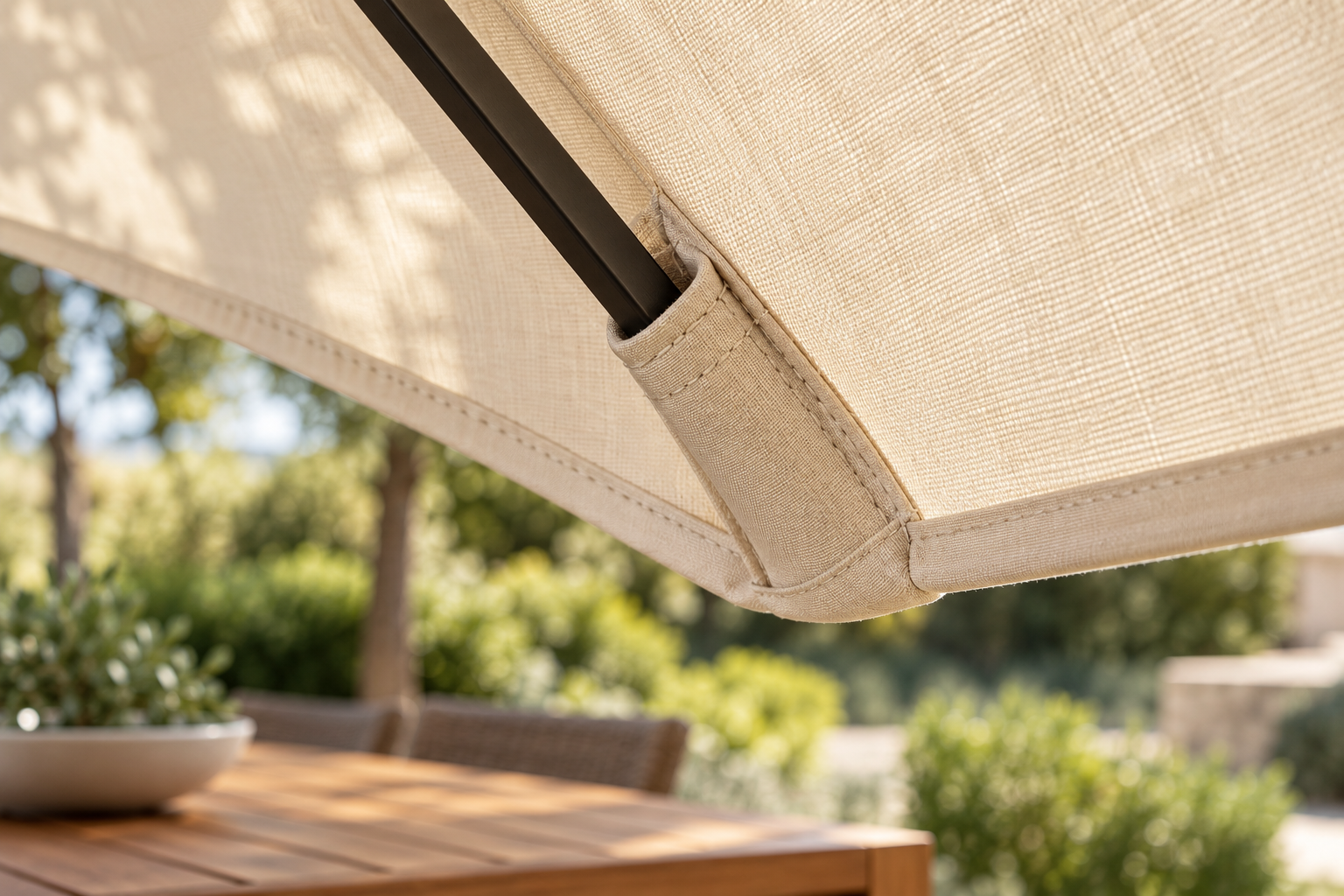
Clean routine dirt without turning it into a major project
Treasure Garden’s routine fabric guidance is straightforward: brush off loose debris, clean with mild soap and cool water, and air dry rather than using a dryer. It also says its solution-dyed canopy fabric can be cleaned while still on the umbrella.
That is a useful model for planning the work, but follow your own umbrella’s directions for the exact cleaner and technique:
- Start dry. Remove loose leaves and dirt before wetting the canopy.
- Clean only as directed. Use the specified gentle method rather than reaching for a stronger cleaner because the umbrella lives outdoors.
- Rinse thoroughly. Finish removing the cleaner before moving on to drying.
- Air dry fully. Leave the canopy in the position the maker recommends, with safe weather conditions and proper support.
A dark mark that remains is a separate stain problem, not a reason to repeat a stronger version of routine cleaning. Ask the maker for stain-specific guidance, especially when you cannot identify the mark.
Give the frame its own care
Check the frame instructions before using the canopy cleaner on metal, painted finishes or moving parts. For example, California Umbrella recommends a soft cloth with mild soap and water for its frames, followed by rinsing and drying. It warns against abrasives and solvents on the finish.
While you are there, look for loose hardware or an attachment that no longer sits correctly. Use the model’s instructions for adjustment; do not force a stiff crank or improvise a repair to a damaged rib.
Dry, close and store in that order
Check folds, seams and the places where ribs meet the hub before putting on a cover. California Umbrella’s storage guidance includes drying the frame, folding the canopy along its seams and using a breathable cover in a dry, ventilated space.
Do not use an outdoor cover as a substitute for drying. If you washed the umbrella late in the day and it is still damp, the job is not finished.
Close the umbrella when required by its wind and weather instructions. The correct base and anchoring also depend on the model; a table is not a substitute for the specified support. When weather interrupts drying, prioritize the umbrella’s safe operating limits rather than keeping it open at all costs.
Should you use hydrogen peroxide on a patio umbrella?
Not based on the word “outdoor” or the fabric name alone. The routine-care sources above are not evidence that peroxide is suitable for your canopy, stitching or finish. Do not substitute concentrated 35% peroxide for the manufacturer’s specified cleaner.
If you are caring for the whole seating area, keep the methods separate. Our outdoor cushion guide explains why the filling changes the cleaning decision, while outdoor rug care covers backing, pads and drying both sides.
