
Do not treat hydrogen peroxide as an all-purpose outdoor cushion cleaner. The right method depends on the stain, the fabric and the cushion’s construction. A fabric-maker recommendation does not automatically apply to the filling, backing or finished cushion.
There is a specific reason peroxide comes up in this question: Sunbrella lists it in a treatment for blood stains. But that is a stain-specific instruction, not a recommendation to spray peroxide across every patio cushion.
What Sunbrella’s peroxide guidance actually says
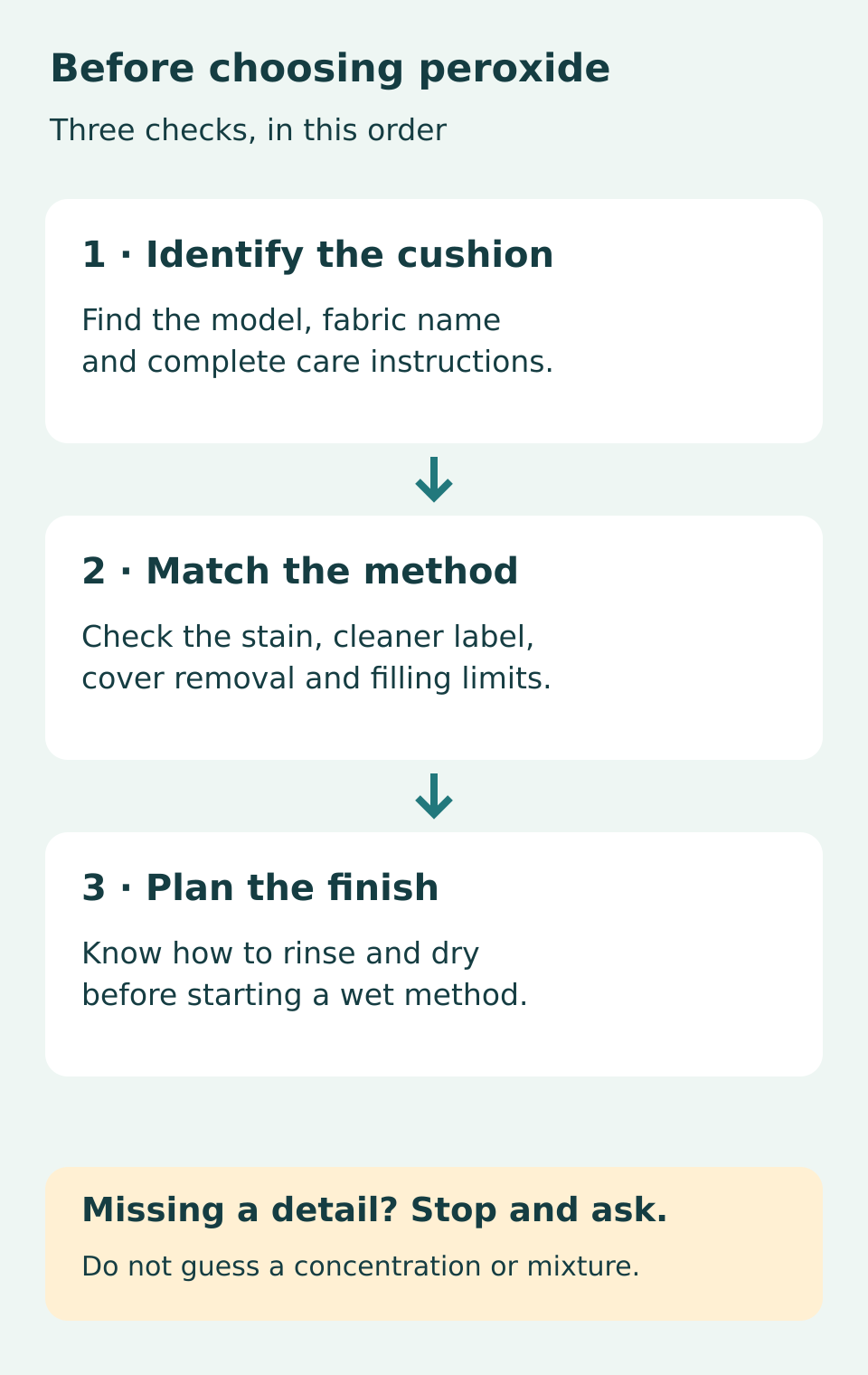
Sunbrella’s stain chart includes hydrogen peroxide in its blood-stain treatment. The chart does not identify the peroxide concentration. That missing detail matters: it is not a basis for substituting concentrated 35% peroxide or inventing a dilution.
If that is the stain you are dealing with, confirm the intended product and concentration with Sunbrella and confirm the method with the cushion maker before proceeding. This guide does not reproduce an incomplete chemical recipe.
For ordinary dust or a drink spill, begin with routine care rather than jumping to a treatment intended for a different stain.
Start by separating two questions: cover or whole cushion?
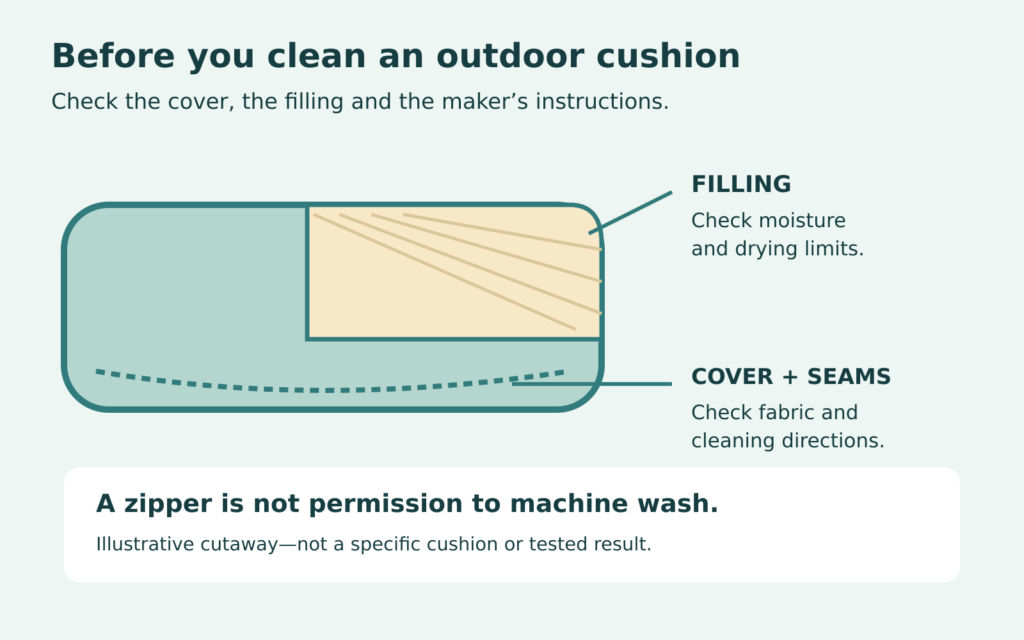
First, identify what you are allowed to clean. A fabric label names the outer material. The furniture maker’s instructions explain what you can do to the assembled cushion.
A zipper is not a wash symbol. Sunbrella advises checking with the furniture manufacturer before taking off a casing; only some removable casings can be machine-washed. See its upholstery care sheet.
For a useful contrast, POLYWOOD specifies spot cleaning for its cushions and pillows, not a washing machine, dryer or pressure washer. A routine that works for one removable cover may be wrong for another finished cushion.
A practical routine for everyday dirt and spills
Once you have matched the instructions to your cushion, work through the job in this order:
- Remove loose debris first. Brush away dry dirt using the method your maker allows. This separates ordinary surface dirt from a mark that needs stain-specific attention.
- Blot a fresh spill instead of rubbing it across the fabric. Sunbrella’s routine guidance starts with blotting liquid spills, then cleaning with mild soap and water, rinsing and air drying.
- Clean the permitted part. Spot cleaning the surface is different from soaking the filling. If the directions apply only to the cover, do not assume they authorize washing the complete cushion.
- Leave time for rinsing and drying. Choose a day when you can finish the entire process. A damp cushion should not go straight into a closed storage box.
These steps organize the job; your cushion’s directions supply the cleaner, amount of water and method. For example, a zippered seat pad marked “spot clean only” stays a spot-cleaning job even when removing the cover would seem easier.
Drying is part of cleaning, not an afterthought
The surface feeling dry does not tell you everything about a thick cushion. Give the cushion the airflow and drying position its maker recommends before putting it back into use or storage.
POLYWOOD recommends standing its cushions on their sides to help water drain and advises allowing them to air dry fully. Do not transfer that advice into a dryer setting: the same guidance rules out a dryer.
When the mark will not come out
Do not keep escalating from one household cleaner to another. Identify the stain as closely as you can, photograph it and tell the manufacturer what you have already tried. Ask for a method for the complete cushion, including any restrictions on the filling.
For indoor seating, our upholstery cleaning-code guide explains W, S, WS and X. For the rest of the patio, umbrella care covers the canopy and frame, which should not be treated as though they were cushions.
