
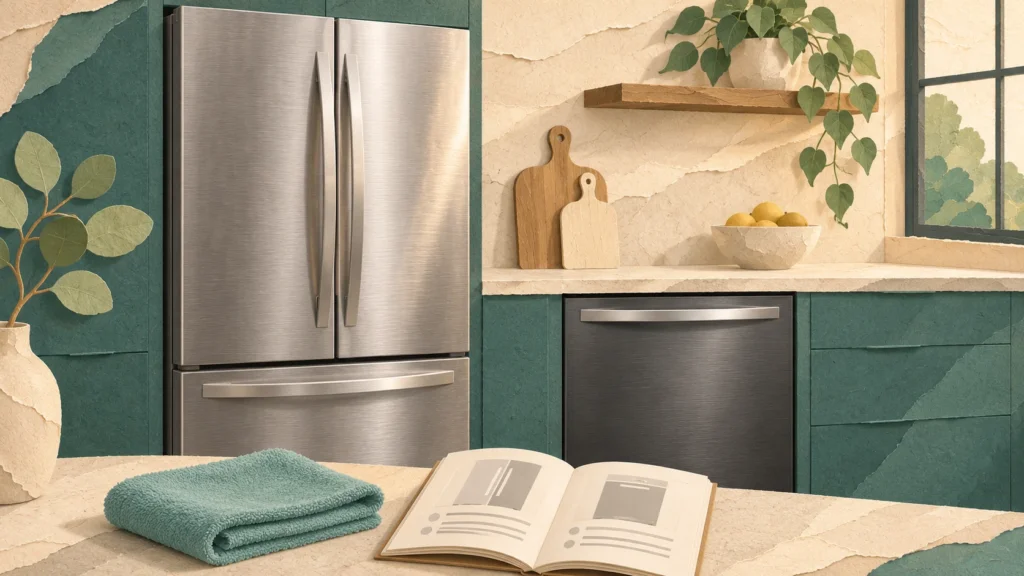
For a stainless steel appliance, start with the finish—not a stronger cleaner. On the GE and Whirlpool finishes discussed below, a soft cloth and mild soapy water are the starting point. Dry afterward. The important difference comes when you reach for polish: a product meant for traditional stainless steel may be unsuitable for a fingerprint-resistant coating.
That explains why a cleaner that works on one refrigerator can be the wrong choice for another. “Stainless steel” may describe the metal underneath, while your cloth touches a protective layer on top.
Which finish is on your appliance?
Look up the model number in the manual or the manufacturer’s support page. Color alone cannot tell you whether the surface is coated.
| Finish | Starting method | Important difference |
|---|---|---|
| Traditional Whirlpool stainless steel | Warm soapy water and a nonabrasive sponge or soft cloth; wipe with the grain and dry. | A suitable stainless steel polish may help with fingerprints and residue. Keep it off plastic trim and rubber gaskets. |
| GE fingerprint-resistant stainless steel | Mild soap, warm water and a clean soft cloth or microfiber cloth; dry. | GE says not to use stainless steel cleaners on this clear-coated finish. |
| GE black stainless steel | Soft cloth, mild soap and warm water; dry. | GE also says not to use stainless steel cleaners on this finish. |
These are manufacturer examples, not rules for every brand. Sources: Whirlpool’s stainless steel care guide, GE’s fingerprint-resistant finish instructions and GE’s premium-finish care guide.
A better way to tackle fingerprints and streaks
For a finish whose instructions allow mild soapy water, use that method before trying to polish the door. Work with a clean, soft cloth rather than an abrasive pad. On traditional brushed stainless steel, follow the direction of the grain. Finish with a soft dry cloth so water does not dry on the surface.
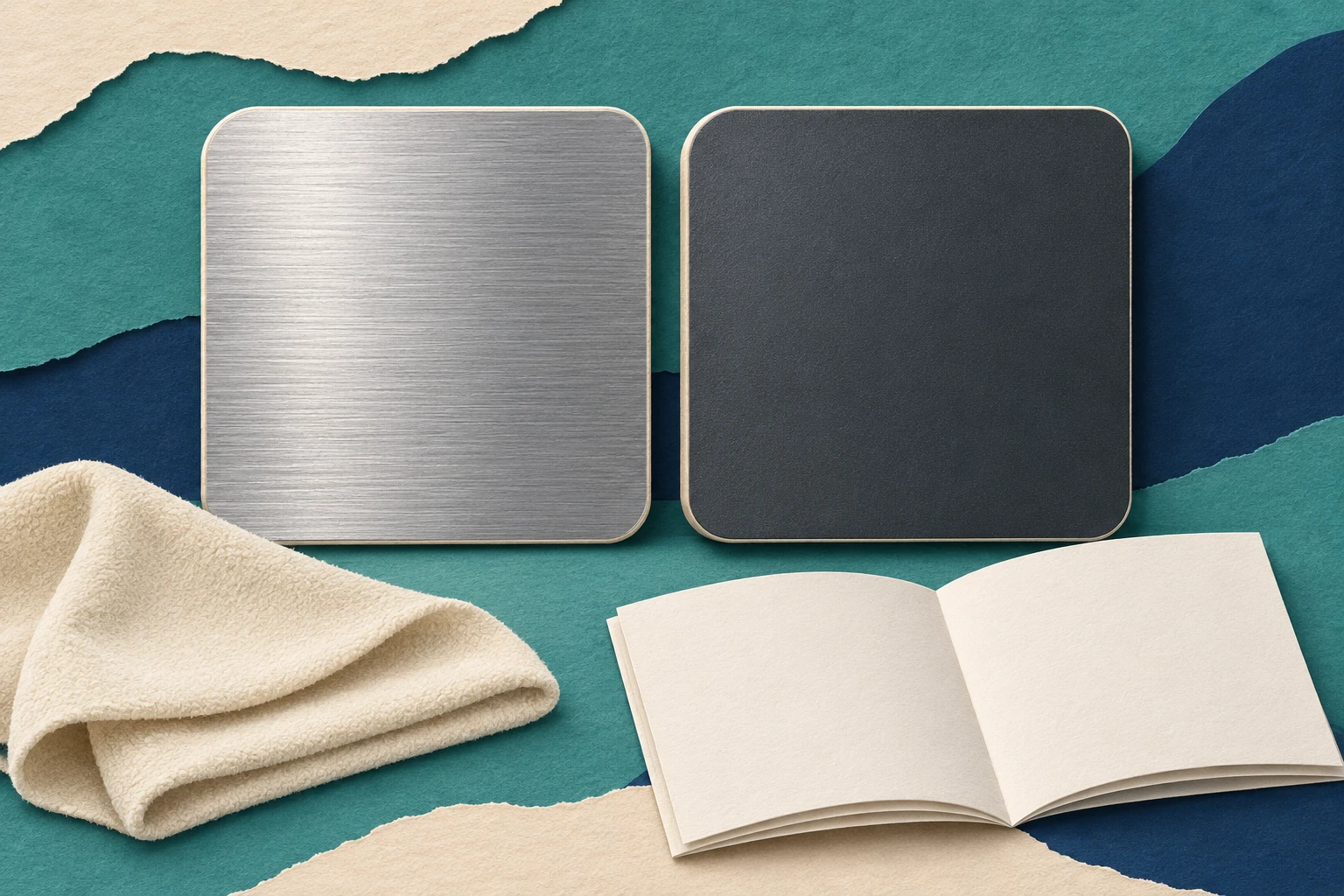
If a streak remains, first consider what changed. Did it appear after the water dried? After applying a polish? Or was it already there? Those observations are more useful than cycling through several unrelated cleaners. Repeating the permitted cleaning method with a clean cloth is different from scrubbing harder.
A scratch or worn coating will not necessarily respond like a fingerprint. Stop if you see peeling, a change in color or a persistent patch of altered sheen. Do not sand or buff a coated appliance as a cleaning experiment. GE notes that heavily scratched fingerprint-resistant coatings do not have an approved repair method in its care guidance.
Can you use hydrogen peroxide instead?
Do not substitute peroxide for the cleaner specified for your appliance finish. The manufacturer guidance above does not establish a peroxide method for these surfaces. It also does not support a blanket claim that peroxide always damages stainless steel.
Industrial stainless steel and an appliance finish are different questions. Solvay lists properly prepared and passivated grades of stainless steel as suitable materials for peroxide storage systems under specified conditions. That is not approval to wipe peroxide onto a coated refrigerator door. See Solvay’s materials-of-construction guidance.
This guide covers appliance exteriors, not oven cavities, dishwasher interiors or food-contact surfaces. If you are comparing other household finishes, our tile and grout guide explains another common mismatch: a cleaner may suit the visible surface but not the material beside it.
