
How Long Does
Hydrogen Peroxide
Last?Shelf Life, Expiration,
and Proper Storage
Hydrogen peroxide can be a long-lasting and versatile solution when stored properly. Here’s what you need to know about its shelf life, what expiration really means, and how to keep it effective.
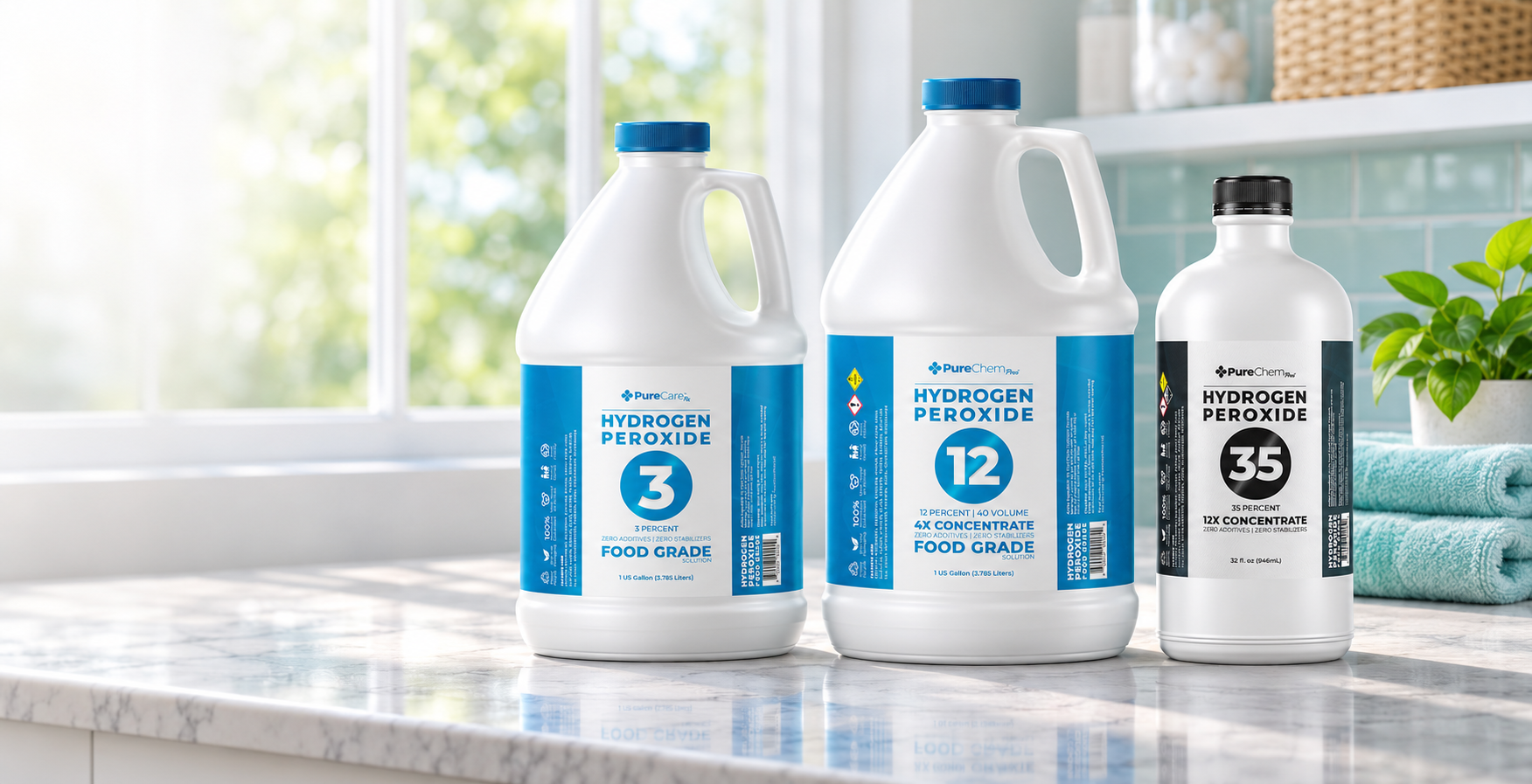
Quick Answer
No single
expiration date.
Hydrogen peroxide doesn’t “go bad” like food, but it does weaken.
Higher strengths
last longer.
The stronger the concentration, the more stable and longer the shelf life.
Storage matters.
Keep it cool, dark, and in its original, light-resistant container.
Gradual loss is okay.
It naturally breaks down into water and oxygen over time.
What does expiration really mean?
“Expiration” on a hydrogen peroxide label doesn’t mean it’s unsafe. It’s a manufacturer’s estimate of when the solution may start to lose some of its strength. Even after this date, it can often still be used for many applications—it may just be a bit less effective.
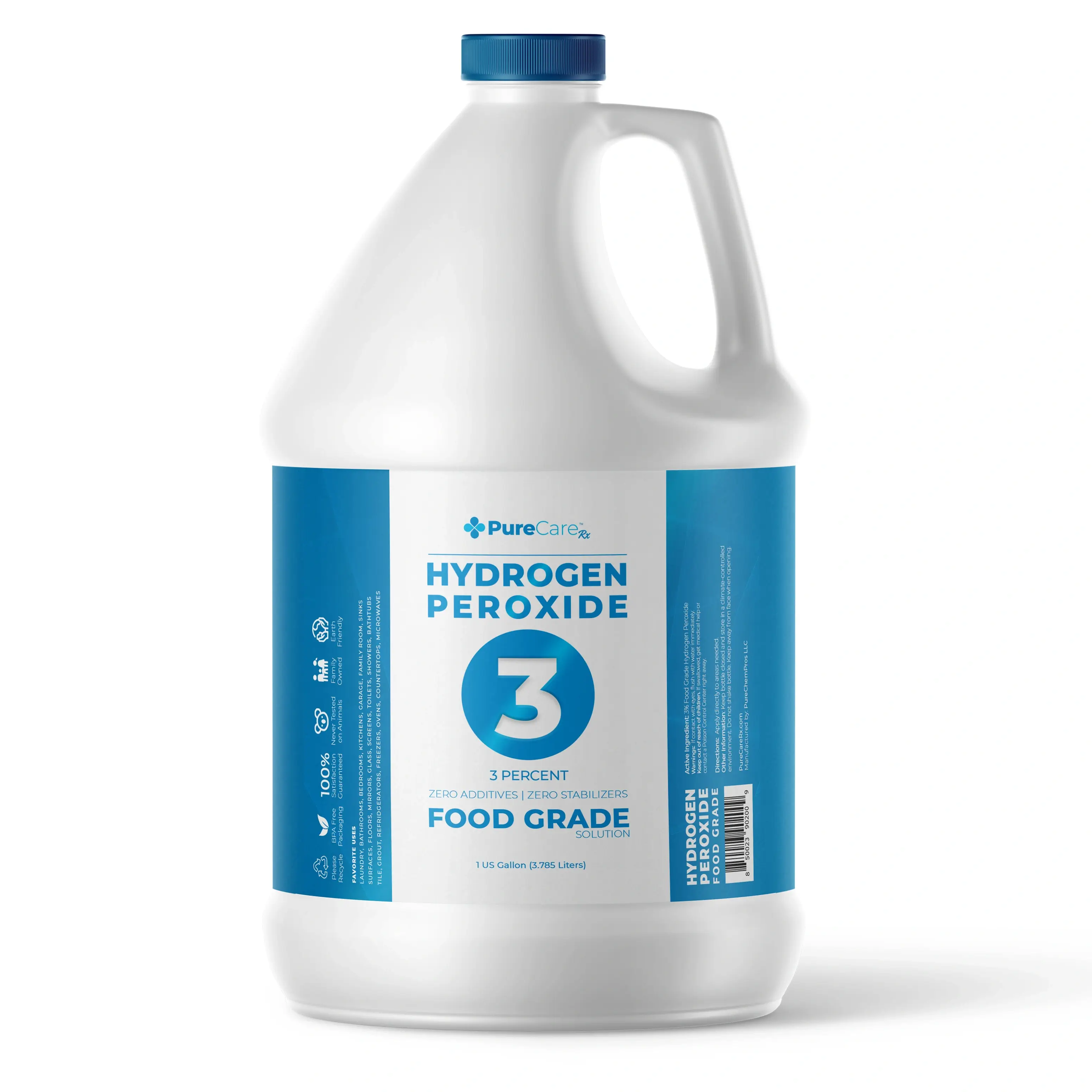 3% hydrogen
peroxide→
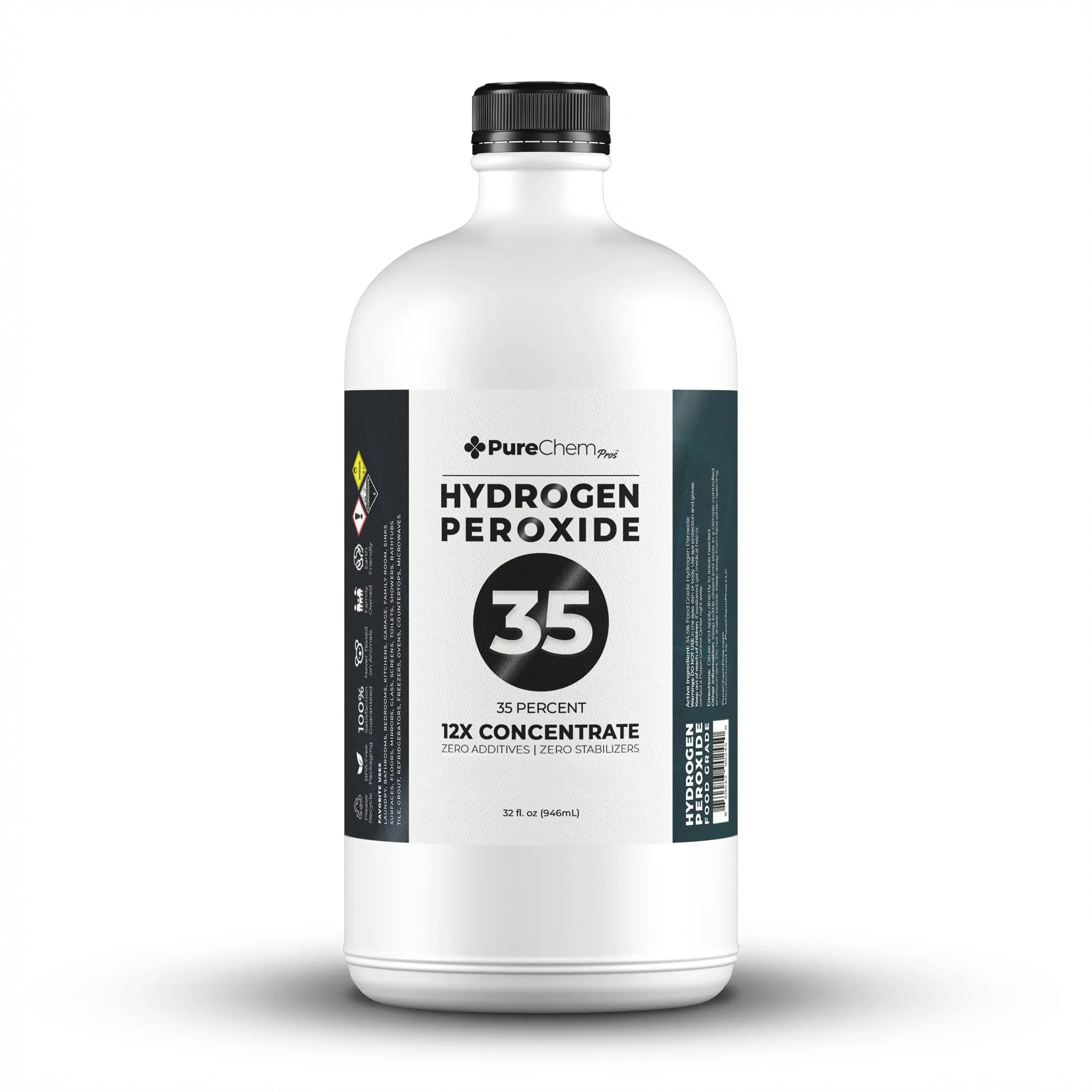 35% hydrogen
peroxide→
Does opening the bottle make it go bad quickly?
Myth:
Hydrogen peroxide goes bad as soon as you open it.
Fact:
Opening the bottle doesn’t mean it’s spoiled. It can remain effective for months when stored properly, kept clean and closed with its original vented cap.
What makes peroxide break down faster?
Heat
Higher temperatures speed up the breakdown process.
Sunlight
UV light can cause hydrogen peroxide to lose its strength.
Contamination
Dirt, metals, or other substances can catalyze breakdown faster.
Container
Non-opaque or improper containers can allow more light and heat.
Frequent air exposure
Repeated opening can introduce small amounts of impurities over time.
Best Storage Practices
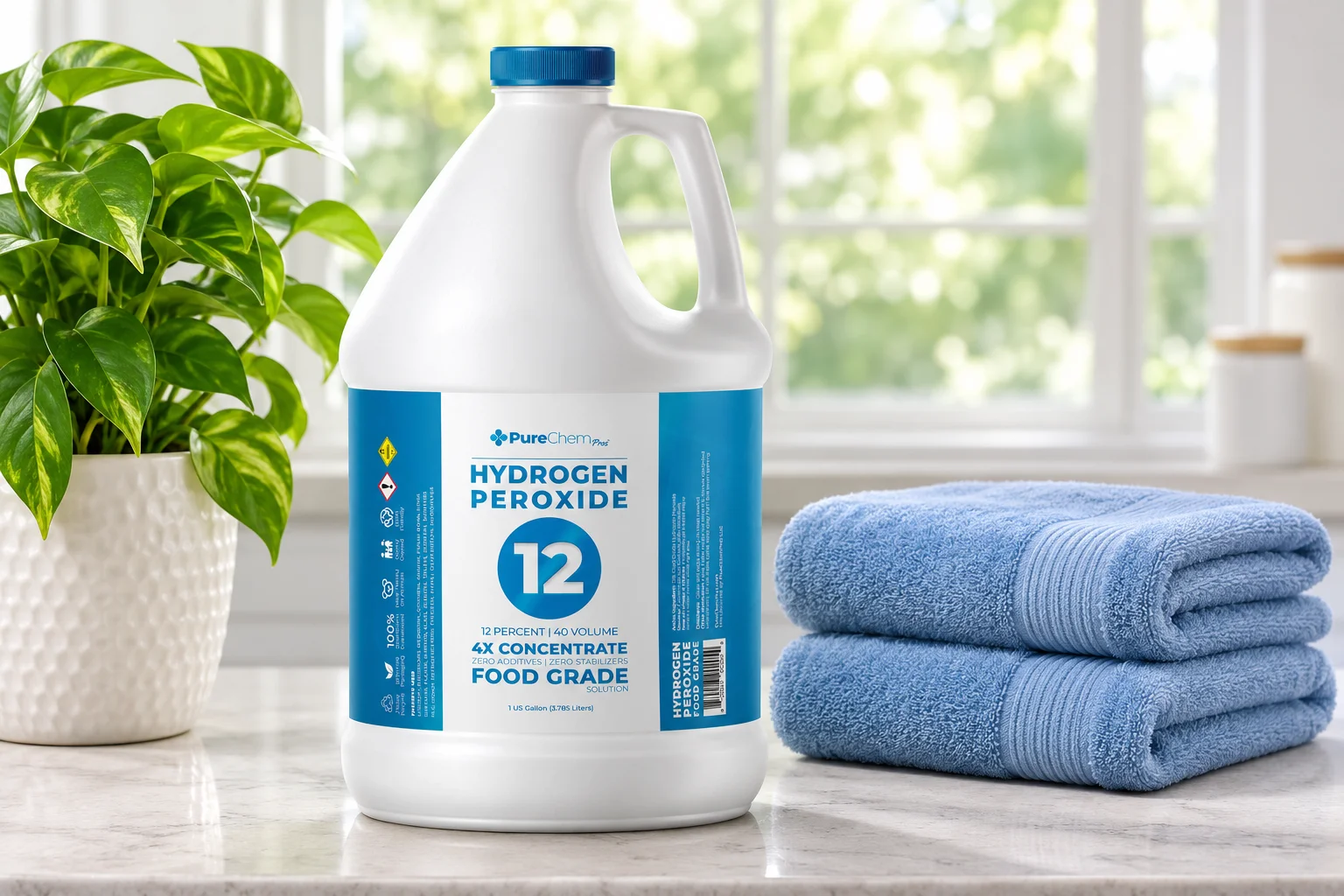
If you dilute your own peroxide
✅ Use distilled or deionized water (recommended).
❌ Use tap water cautiously.
Hypothetical Strength Over Time
Water quality can strongly affect a homemade dilution, and there is no universal decay curve. This planning model is anchored to PureChemPros’ internal lab observations rather than applying one relative-loss percentage to every strength. It shows estimated concentration percentage points—not percent of the starting amount—and is not a guarantee or a substitute for testing.
✓ Distilled or DI Water Scenario
Lab-observation model using annual absolute concentration-point losses.
| Starting strength | 6 months | 1 year | 2 years |
|---|---|---|---|
| 35% | 34.25% | 33.50% | 32.00% |
| 12% | 11.40% | 10.80% | 9.60% |
| 3% | 2.75% | 2.50% | 2.00% |
× Tap Water Scenario
Illustrative municipal-water case at twice the distilled/DI model’s pace.
| Starting strength | 6 months | 1 year | 2 years |
|---|---|---|---|
| 35% | 33.50% | 32.00% | 29.00% |
| 12% | 10.80% | 9.60% | 7.20% |
| 3% | 2.50% | 2.00% | 1.00% |
How to read this: a change from 35% to 33.5% is a loss of 1.5 concentration percentage points (about 4.3% of the starting strength), while 3% to 2.5% is only a 0.5-point loss but about 16.7% of its starting strength. Properly stabilized commercial grades may lose far less under controlled storage; diluted or unstabilized products can behave differently. Tap-water values are deliberately illustrative, not municipal-water predictions. When concentration matters, test the solution or make a fresh dilution.
Helpful Guides

Dilution Guides & Calculators →
Find the right concentration with easy-to-use dilution ratios and calculators.

Pool & Spa Use Guide →
Learn how to use hydrogen peroxide for pool and spa maintenance safely.
Cleaning & Home Use →
Tips for safe, effective cleaning with hydrogen peroxide around your home.
Garden & Plant Use →
See how peroxide can support seed starting and garden maintenance.
Safety note: Concentrated hydrogen peroxide can cause serious injury and supports combustion. Never ingest it, inhale mist, mix it with other cleaners, or transfer it to a beverage container. Always follow the product label and SDS. Review the applicable Bulk Peroxide Safety Data Sheet: 3% SDS, 12% SDS, or 35% SDS.