
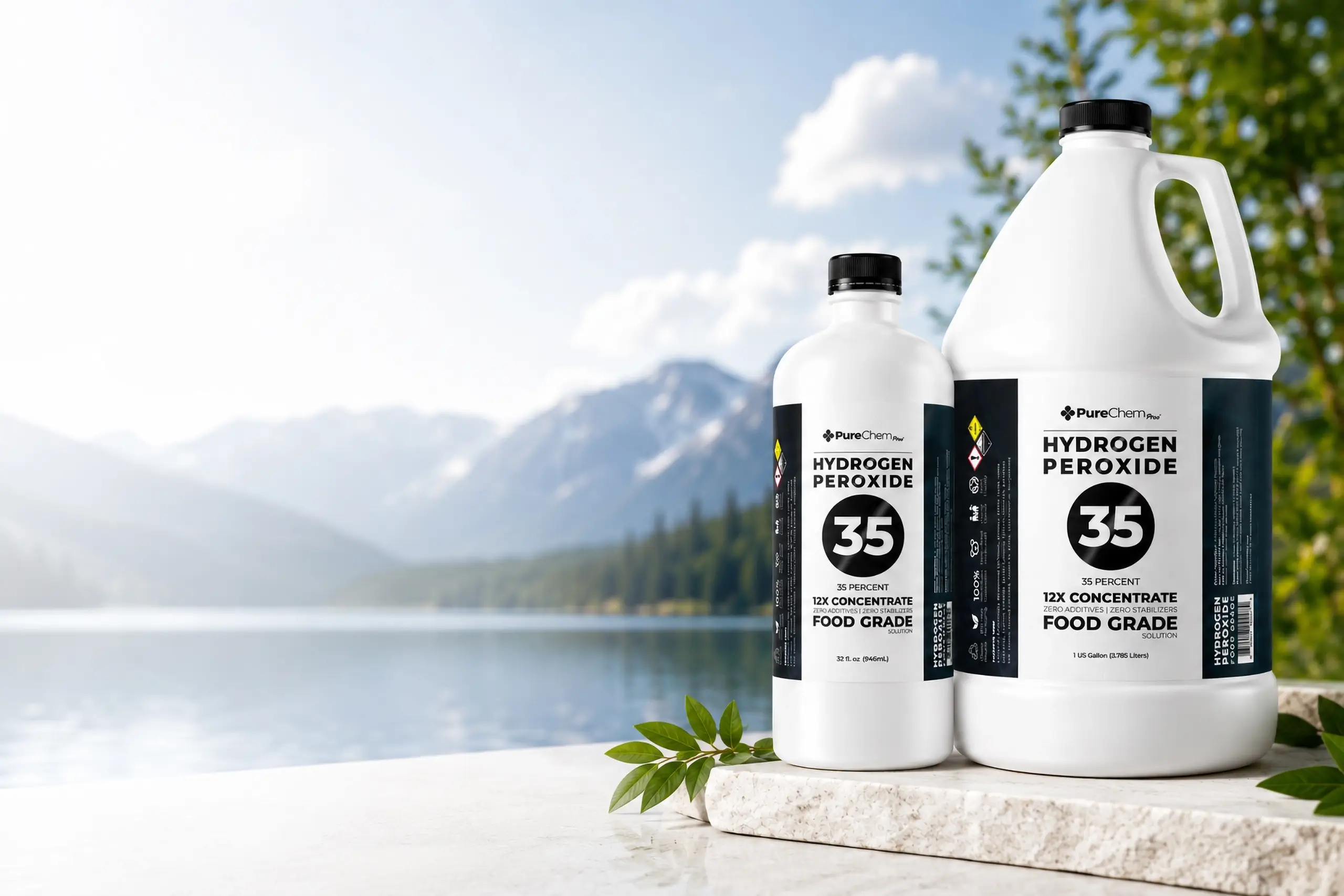
Hydrogen peroxide for everyday cleaning
How to mix a spray bottle, a grout paste and a light glass mist from 3%, 12% or 35%, plus which surfaces to skip.
Plain 3% hydrogen peroxide is one of the simplest cleaners to keep under the sink: no fragrance, no dyes, and it breaks down to water and oxygen. If you buy 12% or 35%, one bottle makes a lot of spray. A 16 oz spray bottle of 3% takes about 2½ tablespoons of 35% topped up with distilled water. Use the calculator for your bottle size, then see which jobs it suits and which surfaces to skip.
Free PDF guide
Take the household cleaning guide with you
- Spray bottle charts
- Room by room tips
- Printable bottle labels
5 pages · by email (and text, if you like)
Check your inbox
We sent a download link to . It can take a minute to arrive. Don't see the email? Check your spam or promotions folder.
Spray Bottle Chart
The two mixes most people keep on hand, for 16 oz and 32 oz spray bottles.
| Your peroxide | 3% spray 16 oz bottle | 3% spray 32 oz bottle | 1% glass mist 16 oz bottle | 1% glass mist 32 oz bottle |
|---|---|---|---|---|
| 3% | Use as is | Use as is | 5.3 fl oz⅔ cup | 10.6 fl oz1⅓ cups |
| 6% | 8 fl oz1 cup | 16 fl oz2 cups | 2.6 fl oz5 tbsp | 5.2 fl oz⅔ cup |
| 12% | 3.9 fl oz½ cup | 7.8 fl oz1 cup | 1.3 fl oz2½ tbsp | 2.6 fl oz5 tbsp |
| 35% | 1.2 fl oz2½ tbsp | 2.5 fl oz5 tbsp | 0.4 fl oz2½ tsp | 0.8 fl oz1½ tbsp |
Measure the peroxide into the bottle, then fill the rest with distilled water.
Room by Room
Kitchen
Counters, sinks, faucets, stovetops and the inside of the fridge. Spray, let it sit a few minutes, then wipe with a damp cloth.
Bathroom
Tubs, showers, tile, sinks and fixtures. For the toilet bowl, pour in about ½ cup of 3%, let it sit 20 minutes, then scrub and flush.
Grout
Mix 3% with baking soda into a thick paste, spread it on grout lines, wait 10 minutes, scrub with a stiff brush and rinse.
Glass & mirrors
Mist with the 1% mix and wipe with a lint-free or microfiber cloth for a streak-free finish.
Stainless steel
Wipe with the 1% mix along the grain, then buff dry. Test a small spot first on coated or fingerprint-proof finishes.
Trash cans & bins
Rinse out, spray the inside with 3%, let it sit 10 minutes, then rinse and let it air dry in the sun.
How to Clean With It
- Spot test first. Peroxide can lighten some materials. Try it on a hidden spot and let it dry before cleaning the whole surface.
- Spray and wait. Spray enough to wet the surface and give it 5 to 10 minutes. You may see fizzing on some stains; that’s normal.
- Wipe or scrub. Wipe with a cloth or sponge, or scrub with a brush for textured surfaces and grout.
- Rinse and dry. Follow with a cloth dampened in plain water, then dry the surface.
Surfaces to Skip or Test First
Skip
Unsealed natural stone, wood, painted or lacquered surfaces, leather, and colored fabrics. Peroxide can lighten or dull them.
Test first
Colored grout, sealed stone and granite, coated stainless and anything with a factory finish. Check the maker’s care instructions.
Metals
Brass, copper, aluminum and some plated finishes can discolor. Wipe off quickly and rinse, or use a cleaner made for that metal.
Safety and Storage
Never mix chemicals
Don’t combine peroxide with bleach, ammonia or vinegar, and don’t put it in the same bottle as another cleaner. Use one product at a time and rinse between.
Use an opaque bottle
Light breaks peroxide down. Use an opaque or dark spray bottle, label it with the strength and date, and mix a fresh bottle every month or so.
Handle concentrate carefully
Wear goggles and gloves when you measure 12% or 35%, and only dilute it with distilled or DI water.
Away from kids and pets
Spray bottles can look like toys or drinks. Label them clearly and store them out of reach.
Ventilate
Open a window or run the fan when you clean bathrooms and other small rooms.
If it splashes
Eyes: rinse with clean water for at least 15 minutes and get medical help. Skin: rinse thoroughly. Follow the SDS first-aid section.
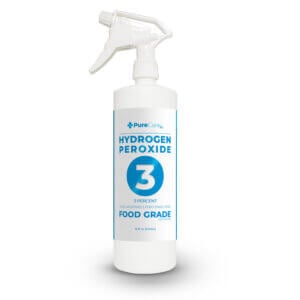 3% Food Grade Hydrogen Peroxide Spray Bottle 16oz
 Continuous Spray White Flairosol Bottle 16oz (500ml)
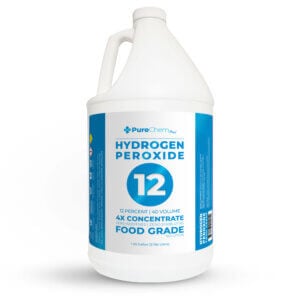 12% Food Grade Hydrogen Peroxide Solution 1 Gallon
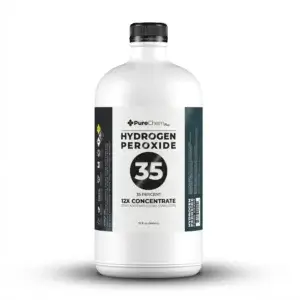 35% Food Grade Hydrogen Peroxide 32 oz
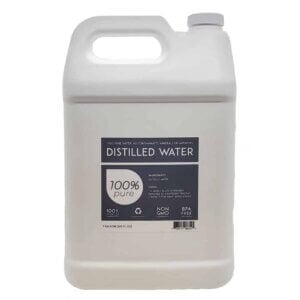 Deionized Distilled Water
Frequently Asked Questions
How do I make a 3% cleaning spray from 35%?
For a 16 oz spray bottle, add about 2½ tablespoons (1.2 fl oz) of 35% and fill the rest with distilled water. For 32 oz, use about 5 tablespoons.
How do I make it from 12%?
Add about ½ cup (3.9 fl oz) of 12% to a 16 oz bottle and fill with distilled water, or about 1 cup for a 32 oz bottle.
Can I put hydrogen peroxide in a clear spray bottle?
Light breaks it down, so an opaque or dark bottle keeps it at strength longer. Our 3% spray bottles come ready to use, or use any opaque sprayer like our continuous spray bottle.
Can I mix hydrogen peroxide and vinegar?
No. Don’t mix them in the same bottle or use them together on a surface. Use one, rinse, then use the other if you need to.
Can I mix it with baking soda?
Yes. A paste of 3% and baking soda is a common way to scrub grout and stained tile. Mix only what you’ll use right away.
Why distilled water?
Minerals in tap water break peroxide down faster, so a spray mixed with tap water loses strength sooner. Distilled or DI water keeps it at the strength you made.
Need a different strength? Our dilution calculator works out any mix from 3%, 6%, 12% or 35%.
Free PDF guide
Take the household cleaning guide with you
- Spray bottle charts
- Room by room tips
- Printable bottle labels
5 pages · by email (and text, if you like)
Check your inbox
We sent a download link to . It can take a minute to arrive. Don't see the email? Check your spam or promotions folder.
Disclaimer
Information only, used at your own risk. This page and calculator share general information about mixing and using hydrogen peroxide for everyday cleaning. Results are estimates based on what you enter. Surfaces vary, so spot test first and follow the care instructions for anything you clean. You are responsible for how you mix and use hydrogen peroxide.
No sanitizing or disinfecting claims. This page is about cleaning appearance and stains only. Hydrogen peroxide sold by Bulk Peroxide is not sold or labeled as a sanitizer or disinfectant, and nothing here is a claim that it controls germs or any other organism.
Handling. Concentrated hydrogen peroxide can cause serious burns to skin and eyes and can damage clothing and surfaces. Follow the product label and Safety Data Sheet, wear protective equipment, and keep it away from children and pets.
Limitation of liability. To the fullest extent permitted by law, Bulk Peroxide disclaims all warranties regarding this information and is not liable for any damages, including damage to surfaces, finishes or property, arising from its use.