

Hydrogen peroxide for seed starting
How seed starters mix it for pre-soaking seeds, misting paper towels and cleaning trays, with soak times by seed type and a calculator for small batches.
Seed starters often soak large or hard-coated seeds before planting, and some use a mild hydrogen peroxide mix instead of plain water. The amounts are tiny: a cup of seed soak takes about a tablespoon of 3% or three quarters of a teaspoon of 12%. Below you’ll find a calculator for small batches, soak times by seed type and a step-by-step method.
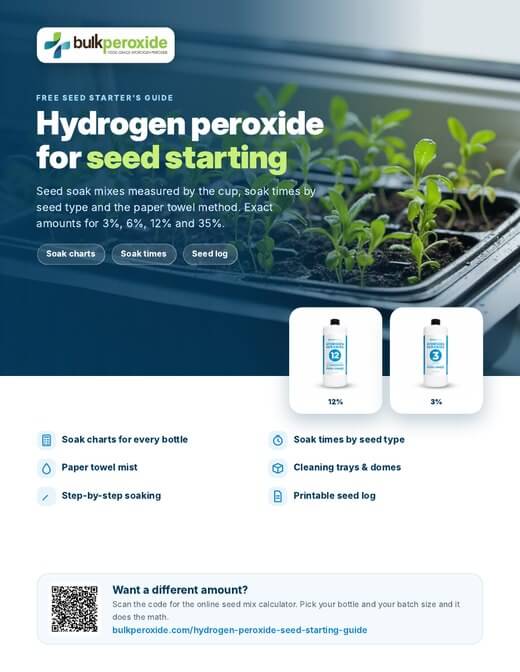
Free PDF guide
Take the seed starting guide with you
- Soak charts by the cup
- Soak times by seed type
- Printable seed log
6 pages · by email (and text, if you like)
Check your inbox
We sent a download link to . It can take a minute to arrive. Don't see the email? Check your spam or promotions folder.
Quick Seed Mix Chart
The three mixes seed starters use most, worked out for a cup of soak and a 16 oz spray bottle.
| Your peroxide | Seed soak 0.2% per 1 cup | Paper towel mist 0.1% per 16 oz bottle | Trays & domes 3% per 16 oz bottle |
|---|---|---|---|
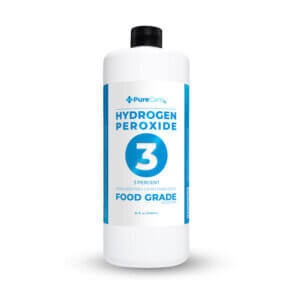
| 3% | 1 tbspin 1 cup water | 1 tbspin 16 oz water | Use as is |
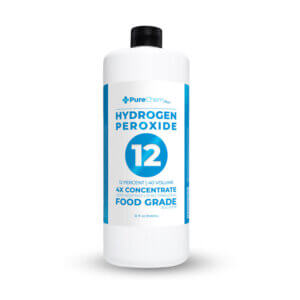
| 12% | ¾ tspin 1 cup water | ¾ tspin 16 oz water | ½ cup+ water to 16 oz |
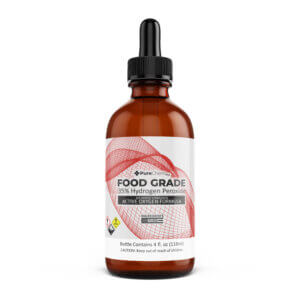
| 35% | ¼ tspin 1 cup water | ¼ tspin 16 oz water | 2½ tbsp+ water to 16 oz |
For small batches, 3% or 12% is easiest to measure. A quarter teaspoon of 35% is hard to measure accurately, so mix a larger batch or use the calculator.
Soak Times by Seed Type
Bigger, tougher seeds take longer for water to get through the seed coat. Tiny seeds are easier to handle dry.
| Seed type | Examples | Typical soak |
|---|---|---|
| Large or hard-coated | Beans, peas, squash, pumpkin, okra, sweet peas, nasturtium, morning glory | 8–12 hoursovernight |
| Medium | Tomato, pepper, cucumber, melon, beet, chard, spinach | 2–6 hoursmorning to afternoon |
| Small or fine | Lettuce, carrot, basil, onion, most herbs and flowers | Skip the soakmist the towel or mix instead |
General guidance gardeners use with plain water and mild mixes alike. Don’t soak any seed longer than 24 hours. Check your seed packet for anything specific to that variety.
How to Soak Seeds, Step by Step
- Mix a fresh batch. Use the calculator for the overnight seed soak and mix it with distilled or DI water in a clean glass or plastic cup.
- Add the seeds. Use enough mix to cover the seeds by about an inch. Label each cup if you’re soaking more than one variety.
- Soak for the right time. Follow the soak times above, at room temperature, out of direct sun.
- Drain and rinse. Pour the seeds into a fine strainer and give them a quick rinse with plain water.
- Plant right away. Sow the seeds into moist seed-starting mix, or lay them on a paper towel dampened with the extra-mild mist mix if you like to pre-sprout.
The Paper Towel Method
Dampen, don’t drench
Mist a paper towel with the 0.1% mix until it’s evenly damp but not dripping. Fold the seeds inside.
Bag it and wait
Slide the towel into a zip bag or covered container, leave a little air, and keep it somewhere warm.
Check daily
Open it once a day, re-mist if it’s drying out, and move sprouted seeds into soil as soon as you see a root tip.
Tips and Cautions
Keep it mild
Stick to the mixes on this page. Strong peroxide can harm seeds, so never soak them in 3% or stronger.
One thing at a time
Don’t add fertilizer, rooting products or anything else to your seed soak. Peroxide and distilled water only.
Fresh each time
Mixed peroxide loses strength, so mix a new batch for every soak and toss leftovers.
Handle concentrate carefully
Wear goggles and gloves when you measure 12% or 35%. Measure over a sink with a measuring spoon you keep just for this.
Away from kids and pets
Seed cups and spray bottles can look like drinks. Label them and keep them out of reach.
If it splashes
Eyes: rinse with clean water for at least 15 minutes and get medical help. Skin: rinse thoroughly. Follow the SDS first-aid section.
Frequently Asked Questions
How much hydrogen peroxide do I use to soak seeds?
For a mild 0.2% seed soak: about 1 tablespoon of 3%, ¾ teaspoon of 12%, or ¼ teaspoon of 35% in one cup of distilled water.
How long should I soak seeds?
Large or hard-coated seeds like beans, peas and squash: 8 to 12 hours. Medium seeds like tomatoes and peppers: 2 to 6 hours. Small seeds like lettuce and carrots: skip the soak. Never go past 24 hours.
Should I rinse seeds after soaking?
Yes. A quick rinse with plain water after draining is what most seed starters do before planting.
Can I use the same mix for every type of seed?
Yes, the 0.2% soak works for any seed you’re soaking. What changes is how long you soak them.
Can I water seedlings with it after they sprout?
Once seedlings have their first true leaves, see our plants and garden guide. Use the mildest mix and test on a few seedlings first.
Why distilled water?
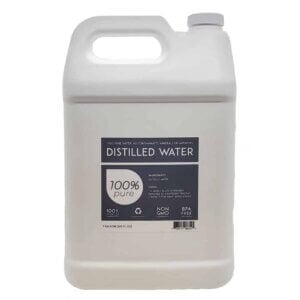
Tap water carries minerals and trace metals that break hydrogen peroxide down faster. Distilled or DI water keeps your soak at the strength you mixed.
Need a different strength? Our dilution calculator works out any mix from 3%, 6%, 12% or 35%.
Free PDF guide
Take the seed starting guide with you
- Soak charts by the cup
- Soak times by seed type
- Printable seed log
6 pages · by email (and text, if you like)
Check your inbox
We sent a download link to . It can take a minute to arrive. Don't see the email? Check your spam or promotions folder.
Disclaimer
Information only, used at your own risk. This page and calculator share general information about how seed starters mix and use hydrogen peroxide. Results are estimates based on what you enter. Seeds vary, so try a few before soaking a whole packet. You are responsible for how you mix and use hydrogen peroxide.
No product claims. Hydrogen peroxide sold by Bulk Peroxide is not sold or labeled for seed treatment or any agricultural use, and nothing on this page is a claim about what it does for seeds or plants. Always follow the product label.
Handling. Concentrated hydrogen peroxide can cause serious burns to skin and eyes and can damage clothing and surfaces. Follow the product label and Safety Data Sheet, wear protective equipment, and keep it away from children and pets.
Limitation of liability. To the fullest extent permitted by law, Bulk Peroxide disclaims all warranties regarding this information and is not liable for any damages, including loss of seeds or plants, arising from its use.