
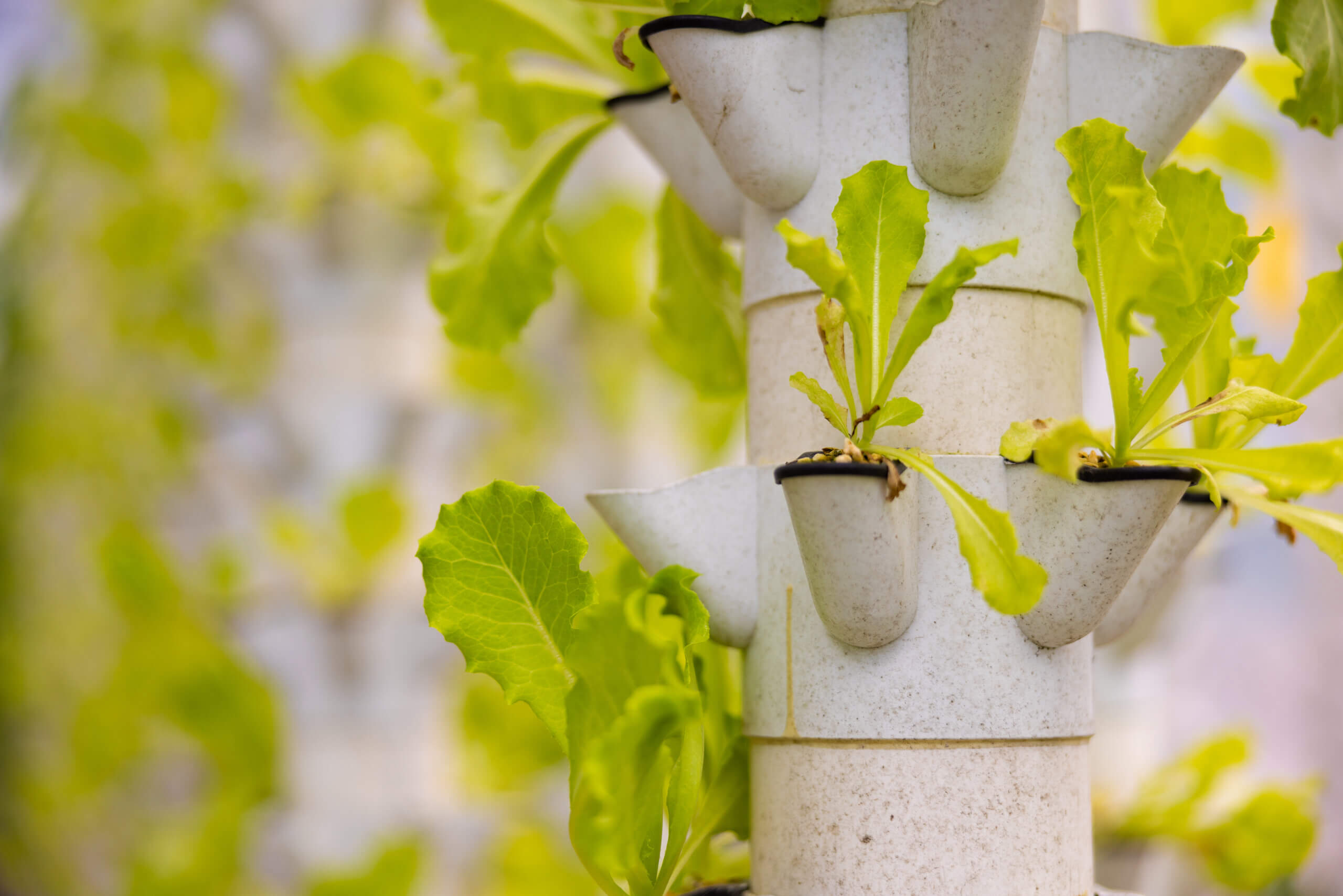
Hydrogen peroxide for plants and gardens
How gardeners mix it for watering, repotting and cleaning pots and tools, with a calculator that gives you exact amounts for your watering can.
Gardeners have mixed hydrogen peroxide into their watering cans for years. The trick is that you only need a little: most garden mixes are a tenth of a percent or less, so a gallon of watering mix takes about two teaspoons of 35% or two tablespoons of 12%. Pick your bottle and your watering can below and the calculator works out the rest.
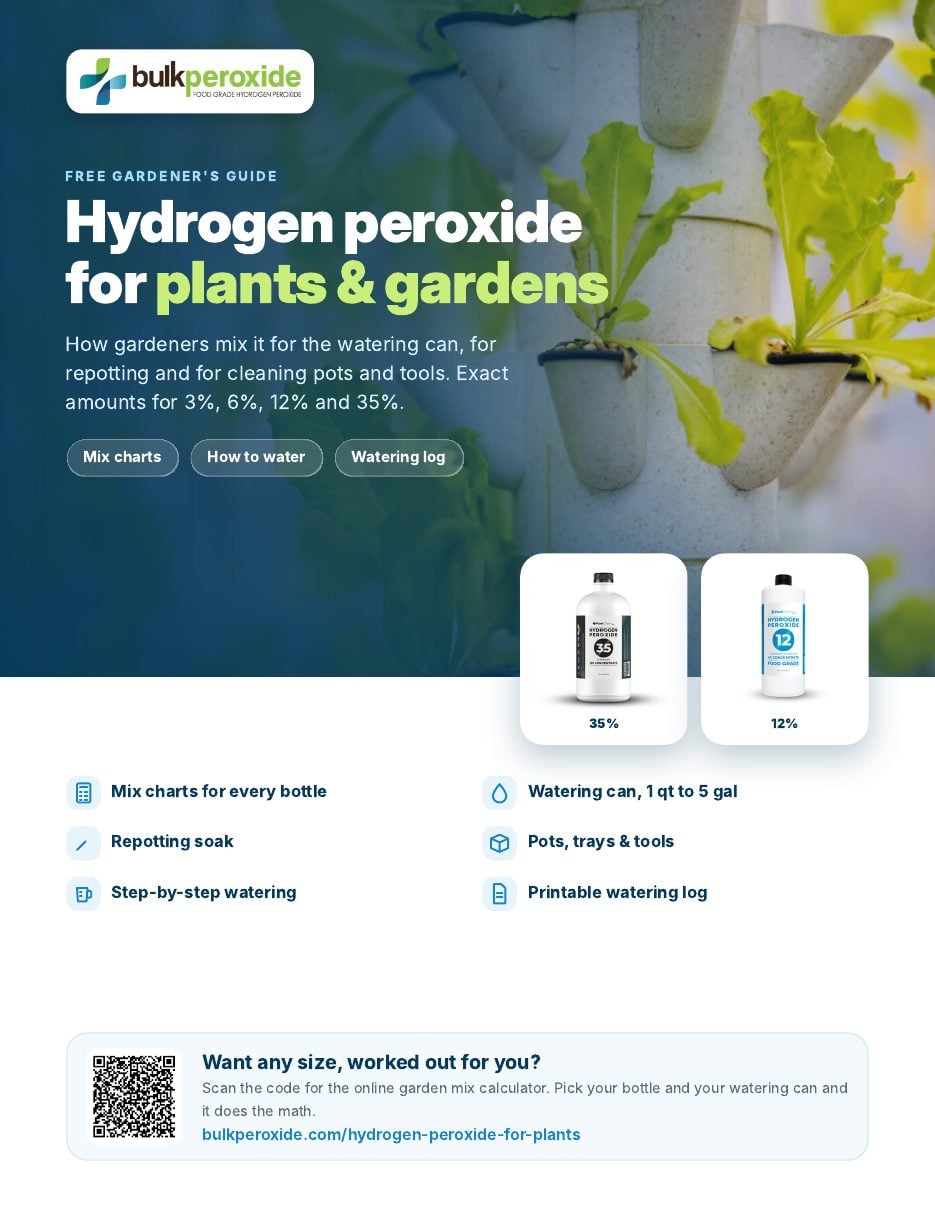
Free PDF guide
Take the plants & garden guide with you
- Mix charts for every bottle
- Watering can to 5 gallons
- Printable watering log
5 pages · by email (and text, if you like)
Check your inbox
We sent a download link to . It can take a minute to arrive. Don't see the email? Check your spam or promotions folder.
Quick Garden Mix Chart
The three mixes gardeners ask us about most, worked out for a gallon watering can and a 16 oz spray bottle.
| Your peroxide | Watering mix 0.1% per 1 gallon | Soil soak 0.25% per 1 gallon | Pots & tools 3% per 16 oz bottle |
|---|---|---|---|
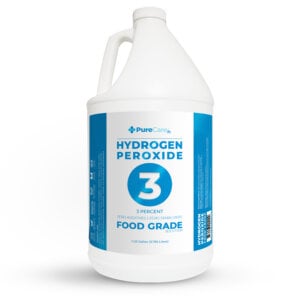
| 3% | 4.2 fl ozabout ½ cup | 10.6 fl ozabout 1⅓ cups | Use as is— |
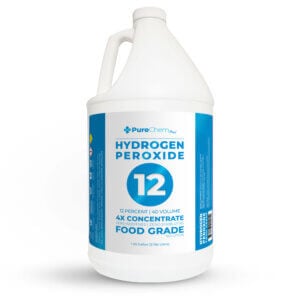
| 12% | 1 fl oz2 tbsp | 2.6 fl oz5 tbsp | 3.9 fl ozabout ½ cup |
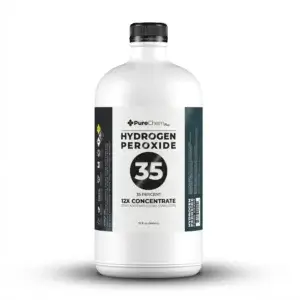
| 35% | 0.3 fl oz2 tsp | 0.8 fl oz1½ tbsp | 1.2 fl oz2½ tbsp |
Measure the peroxide, then add distilled water to make the full amount. For 6% or other strengths, use the calculator above.
How Gardeners Use It
Watering can mix
A mild 0.1% mix in place of plain water for houseplants, containers and raised beds. Many gardeners use it every week or two and plain water in between.
Repotting
A slightly stronger 0.25% soak for potting mix, or a quick rinse for roots before they go into a fresh pot.
Pots, trays & tools
Straight 3% for scrubbing out empty pots, seed trays, plant stakes and pruners before you reuse them. Rinse with water afterward.
How to Water With It
- Mix it fresh. Peroxide starts breaking down once it’s diluted, so mix each watering can right before you use it.
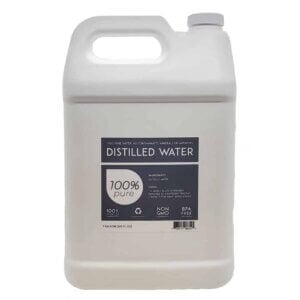
- Use distilled or DI water. Minerals in tap water break peroxide down faster. Distilled water from the store or our deionized distilled water keeps the mix at the strength you made.
- Water at the soil. Pour around the base of the plant rather than over the leaves, the same way you’d normally water.
- Water in the morning. Plants dry off during the day, and you avoid pouring onto hot soil in the afternoon sun.
- Start with a few plants. Try the mix on two or three plants first and watch them for a week before using it on the whole garden.
Tips and Cautions
Stronger isn’t better
Stick to the mild mixes in the chart. Strong peroxide can burn leaves and roots, so never pour concentrate straight onto plants.
Keep it on its own
Don’t combine peroxide with fertilizer, plant food or other garden products in the same can. Use them on different days.
Store it right
Keep your bottle capped, cool and out of the sun, and toss any leftover mix rather than saving it.
Handle concentrate carefully
Wear goggles and gloves when you measure 12% or 35%. Once it’s diluted to a garden mix, it’s much milder.
Away from kids and pets
Label your watering can if you leave mixed peroxide in it, and store concentrate where children and pets can’t reach it.
If it splashes
Eyes: rinse with clean water for at least 15 minutes and get medical help. Skin: rinse thoroughly. Follow the SDS first-aid section.
Frequently Asked Questions
How much hydrogen peroxide do I add to a gallon of water for plants?
For a mild 0.1% watering mix: about ½ cup (4.2 fl oz) of 3%, 2 tablespoons of 12%, or 2 teaspoons of 35%, topped up to one gallon with distilled water.
How much 3% peroxide per cup of water?
About 1½ teaspoons of 3% in a cup of water makes roughly the same 0.1% watering mix.
How often can I water with it?
Many gardeners use the watering mix every week or two and plain water in between. Watch how your plants respond and adjust from there.
Can I spray it on the leaves?
We suggest watering at the soil. If you do mist leaves, use the mild watering mix, test it on a few leaves first, and skip it in hot, direct sun.
Is hydrogen peroxide a fertilizer?
No. It isn’t a fertilizer or plant food and doesn’t replace one. Keep feeding your plants as usual, on a different day from your peroxide watering.
Can I use it on seedlings?
Seedlings are more delicate than established plants. We’re putting together a separate seed and seedling guide; until then, stick to the mildest mix and test on a few first.
Why distilled water instead of tap water?
Tap water carries minerals and trace metals that break hydrogen peroxide down faster, so your mix weakens before it reaches the plant. Distilled or DI water keeps it at the strength you mixed.
Need a different strength? Our dilution calculator works out any mix from 3%, 6%, 12% or 35%, in cups, ounces or milliliters.
Free PDF guide
Take the plants & garden guide with you
- Mix charts for every bottle
- Watering can to 5 gallons
- Printable watering log
5 pages · by email (and text, if you like)
Check your inbox
We sent a download link to . It can take a minute to arrive. Don't see the email? Check your spam or promotions folder.
Disclaimer
Information only, used at your own risk. This page and calculator share general information about how gardeners mix and apply hydrogen peroxide. Results are estimates based on what you enter. Plants vary, so test on a small number first. You are responsible for how you mix and use hydrogen peroxide.
No product claims. Hydrogen peroxide sold by Bulk Peroxide is not sold or labeled as a fertilizer or for any agricultural use, and nothing on this page is a claim about what it does for plants. Always follow the product label.
Handling. Concentrated hydrogen peroxide can cause serious burns to skin and eyes and can damage clothing and surfaces. Follow the product label and Safety Data Sheet, wear protective equipment, and keep it away from children and pets.
Limitation of liability. To the fullest extent permitted by law, Bulk Peroxide disclaims all warranties regarding this information and is not liable for any damages, including damage to plants, arising from its use.